Blogger Income Calculator
Calculate Your Potential Blogger Income
Estimate your monthly earnings based on niche, audience size, and income streams
Estimated Monthly Earnings
People think blogging is a side hustle that turns into a dream job. But here’s the truth: blogger salary isn’t a fixed number. It’s not like a 9-to-5 job with a paycheck every Friday. Some bloggers make $500 a month. Others pull in $50,000 a day. The difference? Strategy, consistency, and knowing how to turn readers into revenue.
Most bloggers don’t make money - at least not for years
A 2025 survey of 12,000 active bloggers found that 68% earned less than $100 a month. Why? They wrote posts, hit publish, and waited for money to appear. That’s not how it works. Blogging income doesn’t come from traffic alone. It comes from how you use that traffic.
Think of it like a garden. Planting seeds (writing posts) is step one. But if you never water them, fertilize them, or pull the weeds, nothing grows. Most bloggers skip the maintenance. They don’t build an email list. They don’t test ads. They don’t create digital products. And then they wonder why they’re broke.
How do bloggers actually make money?
There are five real ways bloggers earn - not just theory, but what’s working in 2026.
- Display ads - Google AdSense, Mediavine, AdThrive. These pay per thousand views. A blog with 50,000 monthly visitors might earn $150-$600/month, depending on niche. Finance and tech blogs earn more. Pet blogs earn less.
- Affiliate marketing - promoting products like Amazon, ShareASale, or ClickBank. Top earners link to tools they use daily. One travel blogger made $18,000 last month just by linking to a single camera bag that cost $299. She didn’t sell 60 units - she sold 60 because she had 15,000 loyal readers who trusted her.
- Digital products - ebooks, templates, courses. This is where the real profit lives. A $47 ebook sold to 1,000 people = $47,000. One fitness blogger created a 30-day meal plan. It cost her $80 to design. She sold 3,200 copies in six months. Net profit? $140,000.
- Freelance services - writing, editing, consulting. Bloggers with authority get hired. A personal finance blogger started offering one-on-one budget coaching. She charges $150/hour. She works 10 hours a week. That’s $6,000/month, extra.
- Sponsored posts - brands pay you to write about them. Rates vary wildly. A small blog with 10,000 readers might get $200. A blog with 100,000+ might get $5,000. But here’s the catch: you need to prove results. Not just traffic. Engagement.
What does a full-time blogger earn in 2026?
Let’s break it down with real examples from bloggers who’ve been at it for 3+ years.
| Income Tier | Monthly Earnings | Typical Audience Size | Primary Income Sources |
|---|---|---|---|
| Beginner | $0-$500 | 5,000-15,000 | AdSense, occasional affiliate links |
| Part-Time | $500-$3,000 | 20,000-50,000 | Affiliate marketing, digital products |
| Full-Time (Mid) | $3,000-$10,000 | 60,000-150,000 | Products, sponsorships, freelance |
| High-Earning | $10,000-$50,000+ | 200,000+ | Course sales, agency work, brand deals |
One woman in Brisbane runs a budgeting blog for young Australians. She has 92,000 monthly visitors. She sells a Notion template for tracking expenses. It costs $39. She sells 400 copies a month. That’s $15,600. She adds a $200/month Patreon for bonus spreadsheets. That’s another $800. She does two sponsored posts a month at $1,200 each. Total? Around $18,000/month. She quit her job two years ago.
What niches pay the most?
Not all blogs are equal. Some niches have higher ad rates, higher affiliate commissions, and more brand interest.
- Finance - Credit cards, loans, investing. Ad rates can hit $25-$50 per 1,000 views. Affiliate commissions on financial tools can be $100+ per sale.
- Software & Tools - SaaS reviews, app tutorials. Affiliate commissions are often 20-40% recurring. A single click on a Notion template link can earn $50/month for as long as the user stays subscribed.
- Health & Wellness - Supplements, fitness gear, mental health courses. High buyer intent. One mental health blogger earns $22,000/month from her online meditation course.
- Home & DIY - Tools, appliances, smart home devices. Affiliate links perform well. People buy once, then keep buying.
- Travel - High ad rates, but low affiliate payouts. Still profitable if you have a strong email list and offer travel planning services.
On the flip side: food blogs, parenting blogs, and pet blogs have huge audiences - but low earnings per visitor. People click, but they rarely buy.
How long does it take to earn a real salary?
Most bloggers give up before month 12. That’s the mistake.
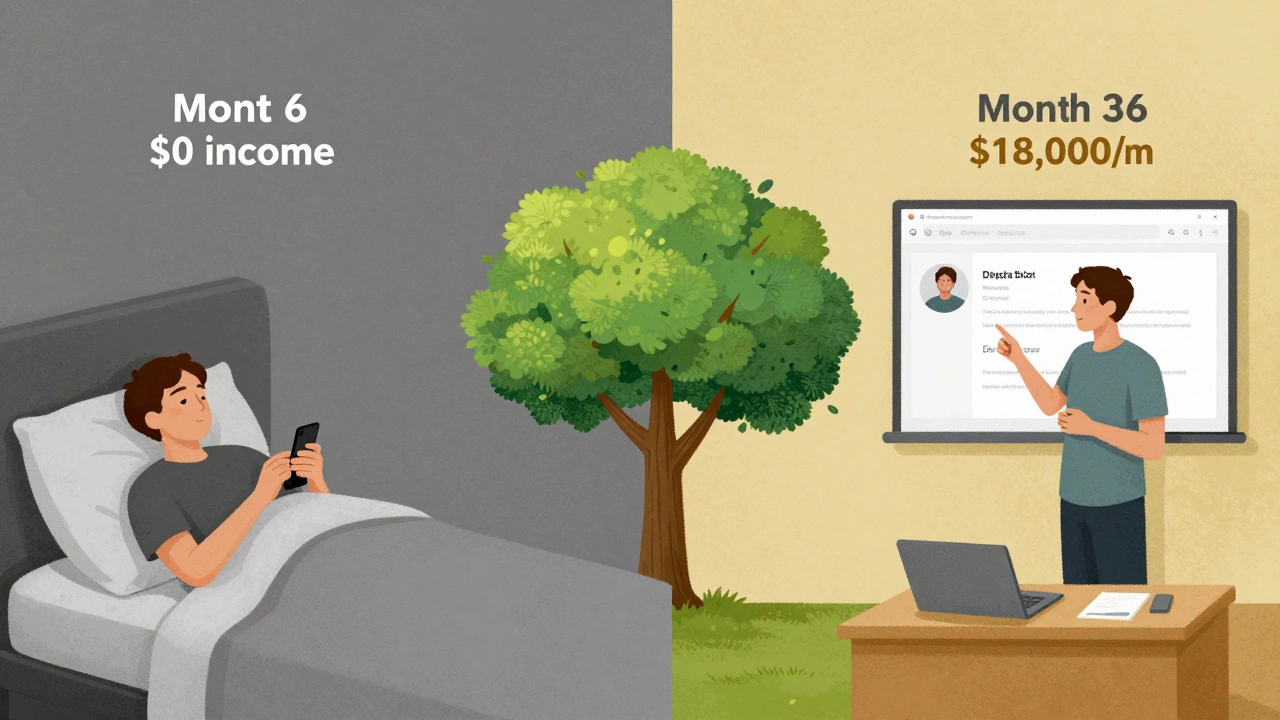
The average blogger who earns over $5,000/month has been blogging for 3.2 years. That’s not a typo. Three years of consistent work. Posting 2-3 times a week. Building an email list. Testing offers. Fixing SEO. Talking to readers. Not quitting when the first post gets 12 views.
Here’s a timeline:
- Months 1-6: Learn. Write. Publish. No income. Or $0-$50.
- Months 7-18: Traffic starts. Affiliate links begin to earn $10-$200/month.
- Months 19-30: Email list grows. First digital product launched. Income hits $1,000-$3,000/month.
- Months 31-48: Multiple income streams. Sponsorships. Freelance gigs. Income crosses $5,000/month.
There’s no shortcut. But there is a path.

What you need to start earning
You don’t need to be a writer. You don’t need to be an expert. You just need to:
- Choose a niche you care about - not one that’s trending
- Write for one person, not everyone
- Build an email list from day one
- Test one income method at a time - don’t jump between ads, affiliates, and products
- Track your numbers. If you don’t measure it, you can’t improve it
One man in Perth started a blog about fixing old motorcycles. He had zero experience. He just loved restoring bikes. He posted once a week. After 18 months, he started selling PDF repair guides for $27. He sold 210 copies in a month. He now earns $6,000/month - and still posts once a week.
Final truth: Blogging isn’t a job. It’s a business.
If you treat it like a hobby, you’ll earn hobby money. If you treat it like a startup - with goals, metrics, and iteration - you can build real income. The salary of a blogger isn’t set by the platform. It’s set by you.
Can you make a living as a blogger in 2026?
Yes - but not by accident. Thousands of bloggers earn $5,000-$50,000/month in 2026. They didn’t get lucky. They built systems: email lists, digital products, and loyal audiences. If you’re willing to work for 2-3 years with consistency, it’s absolutely possible.
Do I need a huge audience to make money?
No. A blog with 10,000 highly engaged readers can earn more than one with 100,000 passive visitors. It’s about trust, not traffic. One blogger with 8,000 subscribers makes $12,000/month selling a $49 course. Her open rate is 62%. That’s the power of a small, loyal group.
Which blogging platform is best for earning money?
WordPress.org (self-hosted) is the clear leader for monetization. It gives you full control over ads, affiliate links, and product sales. Free platforms like Blogger or Medium limit your income options. You can’t install custom plugins, sell digital products, or negotiate sponsorships effectively on them.
How much does it cost to start a money-making blog?
You can start for under $60/year. That’s $5/month. You need: a domain name ($10-$15/year), web hosting ($3-$7/month), and a simple theme (often free). Skip expensive courses, tools, and designers until you’re earning. The first $1,000 should come from your writing - not your wallet.
Is blogging still worth it in 2026?
Absolutely - if you’re not looking for quick cash. Social media algorithms change. YouTube ads fluctuate. But blogs? They keep earning. A well-written post from 2020 can still bring in $200/month in 2026. That’s the power of evergreen content. Blogging is slow, but it’s one of the few digital businesses that compounds over time.