
Blogging Profitability Calculator
Realistic Blogging Earnings
Based on the 2024 data from the article: Most successful bloggers earn from quality audience engagement rather than raw traffic. Enter your metrics below to see your potential earnings.
Key Insight from the Article
The article shows that 1,000 true fans are more valuable than millions of views. Earnings come from loyal readers, not traffic volume.
Let’s cut through the noise. You’ve heard the old stories: someone quit their job after their blog hit $10,000 a month. Then you saw the headlines: "Blogging is dead." So which one’s true? The answer isn’t yes or no. It’s how you do it. In 2024, blogging still makes money - but not for everyone. Not the ones copying templates. Not the ones posting once a week hoping for magic. The winners? They treat blogs like businesses. Not hobbies.
It’s Not About Traffic Anymore - It’s About Trust
Five years ago, you could rank for "best coffee maker" with a 1,200-word post and a few backlinks. Now? Google’s algorithm sees through fluff. If your content doesn’t solve a real problem, it disappears. The top-earning blogs in 2024 aren’t the ones with the most posts. They’re the ones with the most loyal readers.
Think about it. When was the last time you bought something because a blog told you to? Not because of an ad. Not because it was trending. Because someone you trusted said, "I tried this for 3 months. Here’s what actually worked." That’s the shift. Bloggers who earn consistently now build authority, not just pages.
Take Sarah, a mom in Ohio who started a blog about organic baby food. She didn’t write about trends. She wrote about her failures. Burnt sweet potatoes. Too much cinnamon. How she learned to freeze portions without losing nutrients. Her traffic? Slow. But her email list? 92% open rate. Her affiliate sales? $8,300 last month from a single product she tested for 6 months. She didn’t need 100,000 visitors. She needed 500 people who believed her.
How Real Bloggers Make Money in 2024
There are five ways bloggers actually earn - not the flashy ones you see on YouTube. The ones that work quietly, month after month.
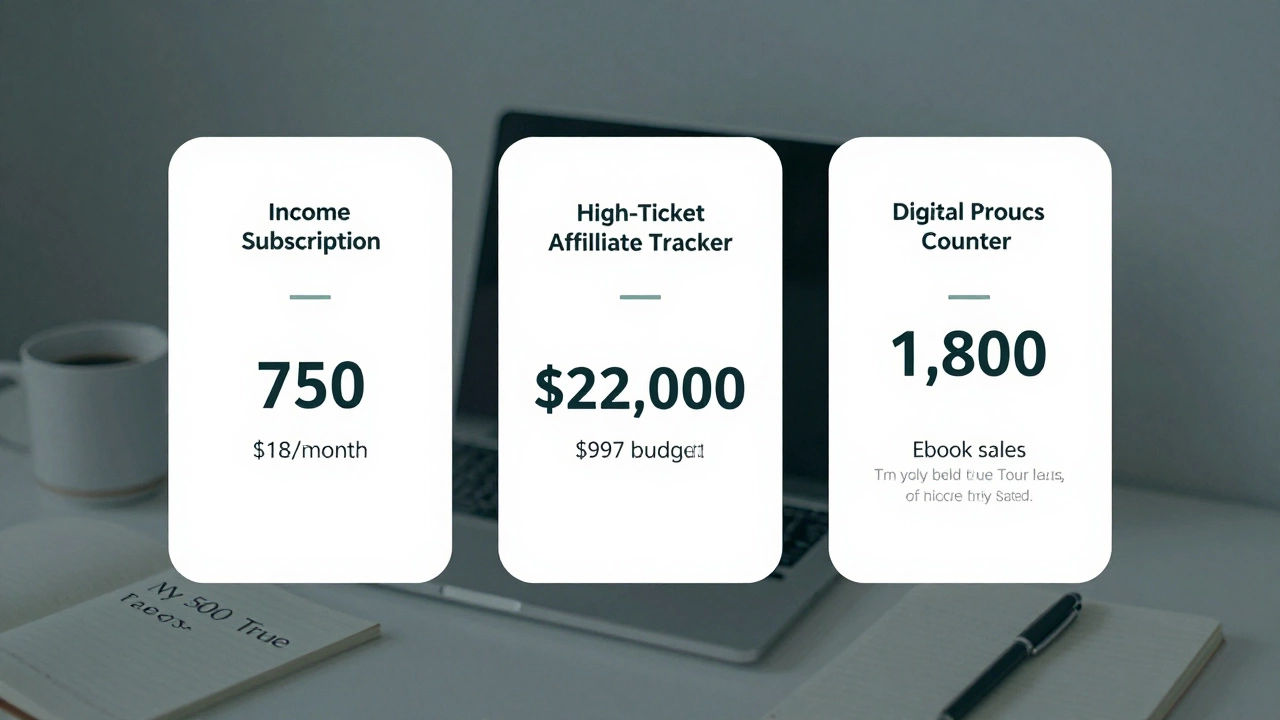
- Member subscriptions: $5-$20/month for exclusive content. Think templates, checklists, or live Q&As. One blogger in Australia makes $14,000/month from 750 subscribers paying $18 for weekly productivity guides.
- High-ticket affiliate offers: Not $5 Amazon commissions. We’re talking software, courses, or services that pay $100-$500 per sale. A finance blogger in Canada earns $22,000/month by recommending budgeting tools that cost $997/year.
- Digital products: eBooks, courses, Notion templates. One blog about sustainable gardening sold 1,800 copies of a $47 PDF on composting in small spaces. No ads. No affiliates. Just one product, promoted for 8 months.
- Client services: Bloggers who offer consulting, editing, or web design. A travel blogger in Portugal started offering custom itinerary planning. Now she makes more from that than from ads.
- Brand partnerships: Not sponsored posts. Real collaborations. A blogger who reviewed home office gear got invited to co-design a chair with a furniture brand. She gets 12% of sales - and now has a product in 17 countries.
Notice anything? None of these rely on ad networks. None need viral traffic. They all require depth - not breadth.
The New Math of Blogging Profitability
Here’s the brutal truth: You don’t need millions of views. You need 1,000 true fans.
That’s the number Chris Ducker, a former blogger turned entrepreneur, proved in his 2023 study of 217 profitable blogs. The top 10% earned over $5,000/month with under 50,000 monthly visitors. The bottom 40%? They had 500,000+ visitors and made less than $500. Why? They chased views, not value.
Let’s break it down. Say you have 10,000 monthly visitors. If 1% of them become email subscribers, that’s 100 people. If 10% of those buy a $49 product? That’s $490. If 5% of your subscribers join a $15/month membership? That’s $75/month. Add affiliate sales from two high-value tools - $300/month. Now you’re at $1,240. No ads. No sponsorships. Just a loyal audience.
That’s doable. Not easy. But doable.
What’s Killing Bloggers in 2024
Three things are burying bloggers who don’t adapt.
- Content mills: AI-generated posts flooding Google with thin, repetitive content. Google’s 2024 update specifically targets these. If your blog looks like it was spit out by a bot, it won’t rank.
- Over-reliance on ads: AdSense pays pennies. You need 500,000 views to make $1,000. That’s 1,500 posts. Most bloggers give up before they hit 100.
- Chasing trends: "Top 10 AI tools" posts die in 3 weeks. The bloggers who win build evergreen content that lasts years - like "How to start a garden in a city apartment" or "The 5 mistakes that ruin your sleep routine."
The bloggers who survive? They write for one person. Not a crowd. Not Google. One person who’s struggling right now, and needs your voice to help them.
Where the Money Is Now (And Where It Isn’t)
Here’s what’s working in 2024:
- Niches with high-intent audiences: Personal finance for freelancers, mental health for remote workers, sustainable parenting, aging in place for seniors.
- Content formats that convert: Step-by-step guides, case studies, comparison reviews with real testing, video tutorials embedded in posts.
- Platforms that build community: Substack, Beehiiv, or even a simple email list with Mailchimp. Social media drives traffic - but email owns the relationship.
Here’s what’s dead:
- Generic listicles: "10 Ways to Be Happy" - no one clicks anymore.
- Automated affiliate links: If you’re using plugins that auto-insert Amazon links, you’re not a blogger. You’re a bot.
- Posting without a strategy: If you don’t know who your reader is, why they’d stay, and what they’ll buy - you’re wasting time.

Getting Started in 2024: A Realistic Roadmap
You don’t need a fancy website. You don’t need to be an expert. You need three things:
- A specific problem: Not "fitness." But "how to lose belly fat after 40 without doing crunches."
- One piece of deep content: Write a 3,000-word guide. Include real data. Show your mistakes. Link to tools you actually used.
- An email list from day one: Offer a free PDF - a checklist, a template, a simple tracker. No upsell. Just value.
That’s it. No ads. No influencers. No viral tricks. Just one good post, one email list, and 100 people who care.
After 6 months, you’ll know if it works. If 5 people bought something you recommended? You’re on the path. If 20? You’ve got a business.
Final Thought: It’s Not About Blogging. It’s About Helping.
The blogs that make money in 2024 aren’t the ones with the most posts. They’re the ones with the most heart. The ones where the writer shows up, not as an expert, but as a fellow traveler. They answer comments. They admit when they’re wrong. They update old posts. They don’t chase algorithms. They chase people.
If you’re ready to build something real - not a blog that looks like a website, but a blog that feels like a conversation - then yes, it’s still profitable. But only if you’re willing to do the work.
Can you make money blogging with zero traffic?
No - not directly. But you can start building value without traffic. Focus on one piece of deep content, get feedback from 5-10 people you trust, and refine it. Then share it in one niche community - a Facebook group, a Reddit thread, a Slack channel. Real conversations, not views, are your first step. Traffic follows trust.
How long does it take to make money from a blog in 2024?
Most bloggers who earn over $1,000/month take 12-18 months. But it’s not about time - it’s about consistency. If you publish one high-value post every two weeks, build an email list from day one, and test one monetization method (like a digital product) after 3 months, you’ll see results faster than someone posting daily but randomly. The first dollar often comes before the first 1,000 visitors.
Do you need a website to make money blogging?
Not technically - you can use Substack or Medium. But if you want control, ownership, and higher earnings, you need your own site. Platforms can change policies, remove posts, or shut down. A self-hosted WordPress site gives you full control over your content, audience, and income streams. Plus, you can integrate email tools, affiliate links, and digital products without restrictions.
Is AI content killing bloggers?
AI content is flooding the web - but it’s not killing bloggers. It’s killing lazy bloggers. Google now rewards content that shows experience, expertise, and human insight. If your blog feels like it was written by a machine, it won’t rank. But if you use AI to help draft, then rewrite it with your voice, your stories, and your mistakes - you’ll outperform 90% of the competition. AI is a tool, not a replacement.
What’s the cheapest way to start a profitable blog in 2024?
Start with a $3/month shared hosting plan (like Namecheap or Hostinger), install WordPress, pick a free theme (like Astra or Kadence), and write one 2,000+ word guide on a topic you know well. Use a free email tool like MailerLite. That’s it. Your total cost? Under $50 in the first year. No plugins. No ads. No fancy tools. Just your knowledge and consistency.