Domain Professionalism & Value Calculator
Configure Your Setup
Select your options and click Analyze to see your domain's professional impact score.
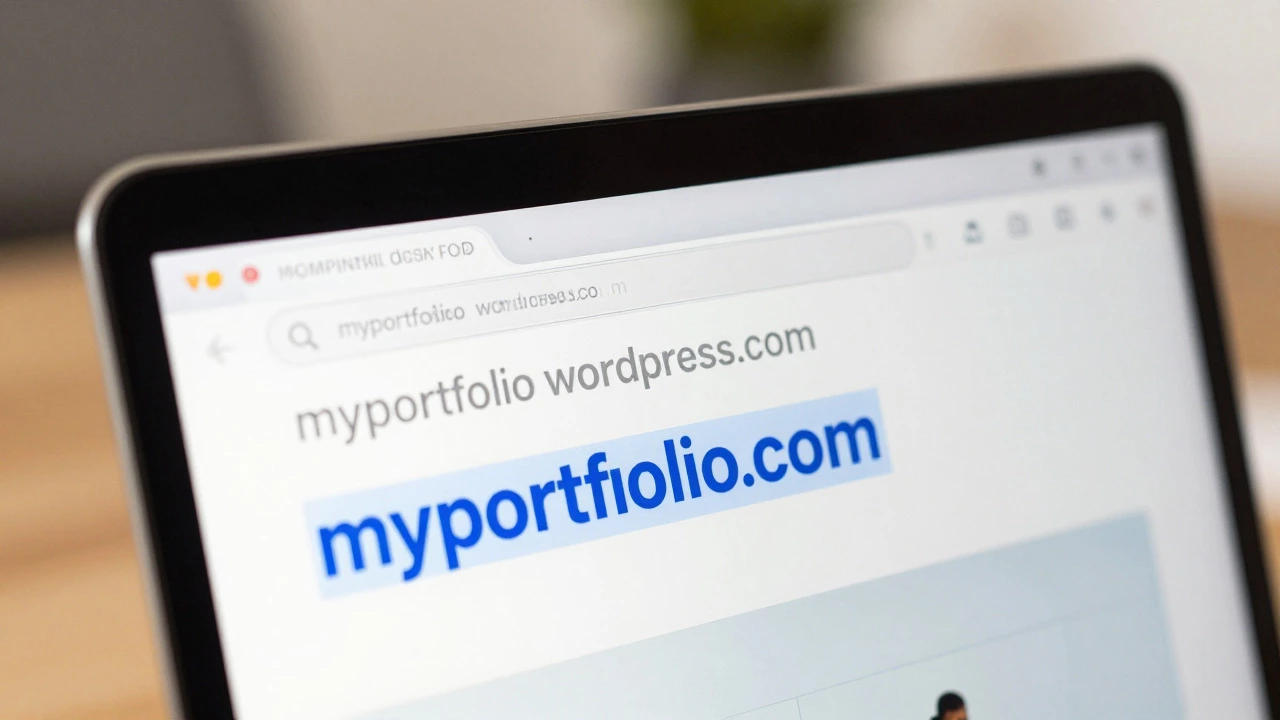
Imagine you’ve just finished building the most incredible online portfolio. The design is sleek, the content is sharp, and the images are high-resolution. But when you tell a friend your address, they have to type something like myportfolio.wordpress.com or user123.wixsite.com/site. It feels temporary. It feels borrowed. This is the core dilemma facing every new creator in 2026: do you actually need to buy a separate domain name a unique web address that identifies your site on the internet, such as example.com, or can you just stick with the free option provided by your builder?
The short answer is yes, if you want to be taken seriously. But the long answer depends entirely on what you are trying to achieve. Are you testing an idea for fun? Or are you building a business asset? Let’s break down the reality of owning your digital real estate without the technical jargon.
What Is a Domain Name, Really?
Think of the internet like a massive city. Your web hosting the physical server space where your website files are stored is the land you build your house on. The domain name is the street address. Without the address, people can’t find your house, even if it’s built beautifully.
Technically, computers don’t understand words like "kieranlockley"; they only understand numbers called IP addresses (like 192.0.2.1). A domain name acts as a human-readable label for those complex numbers. When you type google.com, your browser asks a DNS server Domain Name System servers that translate domain names into IP addresses to find the correct IP address for Google’s servers. It happens in milliseconds, but it’s the bridge between human language and machine code.
In 2026, this system remains the backbone of the web. While some platforms try to hide this complexity behind user-friendly interfaces, the underlying mechanism hasn’t changed. You either own the address, or you rent a room in someone else’s apartment complex.
The Free Route: Subdomains and Their Hidden Costs
Platforms like WordPress.com, Wix, Blogger, and Weebly offer free plans. These plans give you a subdomain a secondary part of a domain name, usually preceding the main domain, like blog.example.com. For instance, yourname.wixsite.com.
Is this bad? Not necessarily. If you are writing a personal diary that no one else reads, or prototyping a landing page to test a hypothesis before investing money, a subdomain is fine. It costs zero dollars. However, there are significant downsides that often catch beginners off guard:
- Lack of Credibility: A subdomain signals "amateur." Clients and customers associate professional businesses with custom domains. Seeing
.wixsite.comin the URL bar can subconsciously lower trust scores. - SEO Limitations: Search engines like Google treat subdomains differently than root domains. You are competing with thousands of other sites on the same platform for ranking authority. It is much harder to rank for competitive keywords when you don’t own the primary domain identity.
- No Portability: This is the biggest trap. If you start on Wix and decide to move to WordPress.org later, you lose your audience. You cannot take
yourname.wixsite.comwith you. You have to rebuild your traffic from scratch. - Advertising Intrusions: Most free tiers force platform branding or ads onto your site. These ads generate revenue for the platform, not you, and they clutter your user experience.
Why Owning a Custom Domain Changes Everything
Buying a domain name-typically costing between $10 and $20 per year-is the single highest-ROI investment you can make for your online presence. Here is why it transforms your project from a hobby into an asset.
1. Brand Identity and Trust
A custom domain allows you to create a brand. kieranlockley.com looks like a destination. kieranlockley.blogspot.com looks like a guest post. In the world of digital marketing, perception is reality. Users are more likely to click on a link that ends in .com, .org, or .au because these extensions signal legitimacy and permanence.
2. Email Professionalism
This is often overlooked. With a custom domain, you can set up email addresses like [email protected]. Compare that to [email protected]. The former establishes a corporate identity; the latter looks like a side hustle. Many professional email services, such as Google Workspace or Microsoft 365, require a custom domain to function fully.
3. Full Control and Ownership
When you use a free builder, you are subject to their terms of service. If they change their pricing model, shut down a feature, or ban your account (yes, it happens), you have little recourse. When you own your domain, you control it. You can point it to any hosting provider, any builder, or any static site generator. Your domain is portable; your platform is not.
| Feature | Free Subdomain (e.g., .wixsite.com) | Custom Domain (e.g., .com) |
|---|---|---|
| Credibility | Low (Looks amateur) | High (Looks professional) |
| SEO Potential | Limited (Shared authority) | Unlimited (Own authority) |
| Portability | None (Stuck on platform) | Full (Move anywhere) |
| Email Address | Gmail/Yahoo only | Custom ([email protected]) |
| Cost | $0 | $10-$20/year |
| Ads/Branding | Platform ads often forced | Your choice only |
Choosing the Right Extension (TLD)
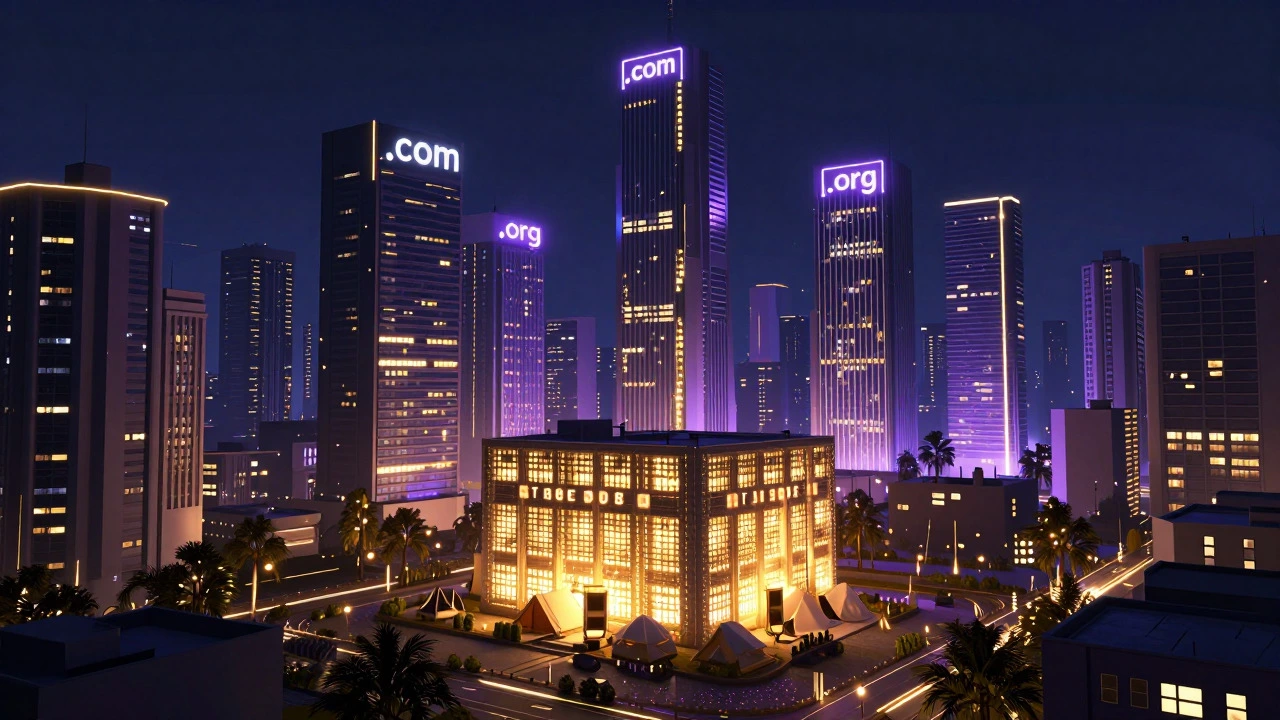
In 2026, we have hundreds of Top-Level Domains (TLDs) available. Should you go with .com, .net, .io, or something niche like .photography? Here is the practical breakdown.
.com remains the gold standard. It is the default assumption for users. If you say your website is "KieranLockley," people will instinctively type kieranlockley.com. If you own kieranlockley.net, you will constantly lose traffic to whoever owns the .com version. Always prioritize .com if it is available.
.org is best for non-profits, charities, and open-source projects. It signals trust and community rather than commerce.
.io and .tech are popular among startups and developers. They are trendy and clearly signal a tech-focused audience. However, they are often more expensive ($30-$60/year) and less universally recognized by older demographics.
Country Code TLDs (ccTLDs) like .au (Australia), .uk (United Kingdom), or .de (Germany) are excellent if your target audience is strictly local. Google uses these extensions as a strong signal to rank your site higher in local search results. If you are a Sydney-based plumber, .com.au is far superior to .com.
Avoid overly clever misspellings or obscure extensions like .xyz or .top unless you have a specific reason. They are often associated with spam or low-quality sites, which hurts your initial trust factor.
How to Buy a Domain: Avoiding Common Pitfalls
Buying a domain is simple, but the industry is rife with upsells and confusing pricing. Here is how to navigate it safely.
- Use a Reputable Registrar: A registrar is the company accredited to sell domains. Popular options include Namecheap, GoDaddy, Cloudflare, and Porkbun. Cloudflare is particularly noted for selling domains at wholesale prices with no markup.
- Beware of First-Year Discounts: Many registrars offer a domain for $0.99 for the first year, only to charge $20-$40 for renewal. Always check the renewal rate before buying. Locking in a fair price for years 2 through 10 is more important than saving a dollar today.
- Skip the Unnecessary Add-ons: During checkout, you will be asked to buy privacy protection, email hosting, and website builders. In 2026, WHOIS Privacy A service that hides your personal contact information from the public domain registry database should be included for free by most registrars due to GDPR regulations. If it isn’t, choose a different registrar. You rarely need to buy email hosting separately unless you are setting up a complex enterprise setup.
- Enable Auto-Renewal: Losing your domain because you forgot to renew it is a costly mistake. It can take months to recover a lapsed domain, during which time someone else might snatch it. Enable auto-renewal and keep your payment method updated.
Connecting Your Domain to Your Website
Once you own the domain, you need to point it to your website. This involves changing your DNS records Configuration files that dictate how your domain directs traffic to servers. There are two main ways to do this:
Nameservers: Most website builders (Wix, Squarespace, Shopify) will provide you with custom nameservers (e.g., ns1.wixdns.net). You log into your domain registrar and replace the default nameservers with these. This hands over full DNS control to the builder. It is the easiest method for beginners.
A Records and CNAMEs: If you want to keep your domain management separate from your hosting (recommended for advanced users), you add an A Record pointing to your host’s IP address, or a CNAME record for subdomains like www. This gives you more flexibility to change hosts without moving your domain registration.
Note that DNS changes can take anywhere from a few minutes to 48 hours to propagate globally. Patience is key here. If your site doesn’t load immediately after making changes, wait a few hours and clear your browser cache.
When Can You Skip Buying a Domain?
There are legitimate scenarios where skipping a custom domain makes sense:
- Temporary Landing Pages: If you are running a 48-hour flash sale or testing a product idea with paid ads, a free subdomain is sufficient. You aren’t building long-term equity.
- Internal Company Tools: Dashboards or internal wikis that only employees access don’t need public-facing branding.
- Student Projects: If you are learning to code for a class assignment, the focus is on the skill, not the brand.
However, for any project intended to exist beyond a few weeks, or any project meant to generate income, the cost of a domain is negligible compared to the value it adds.
Can I get a free custom domain name?
True free custom domains are rare and often come with strings attached. Some hosting providers like Bluehost or Hostinger may include a free domain for the first year when you purchase a hosting plan. However, standalone free domains (like Freenom used to offer) are largely unreliable or have been discontinued due to legal issues. Be wary of services that give you a "free" domain but lock you into expensive annual contracts.
What happens if I don't renew my domain?
If you fail to renew, your domain enters a grace period (usually 30 days) where you can still renew it at the standard price. After that, it goes into a redemption phase where renewal fees skyrocket (often $80+). Finally, it is released back into the public pool, and anyone can register it. Your website will go offline, and you will lose all SEO authority associated with that URL.
Is it better to buy my domain from my web host or a separate registrar?
It depends on your technical comfort level. Buying from your host (like Bluehost or SiteGround) makes setup easier because they handle the DNS connection automatically. However, buying from a dedicated registrar (like Namecheap or Cloudflare) gives you more control and prevents vendor lock-in. If you switch hosts later, keeping your domain separate means you don't have to transfer ownership, just update DNS records.
Does a domain name affect SEO directly?
Not directly in terms of keywords. Google has stated that having keywords in your domain (like best-plumber-sydney.com) provides minimal to no ranking boost today. However, it affects SEO indirectly by improving click-through rates (CTR) and trust. A clean, memorable domain encourages backlinks and direct traffic, which are strong ranking factors.
Can I change my domain name later?
Yes, but it is disruptive. You would need to buy a new domain, set up redirects from the old domain to the new one (301 redirects), and update all your content, social media links, and email signatures. It takes time to transfer SEO authority to the new domain. It is best to choose a domain name that will grow with your brand from the start.