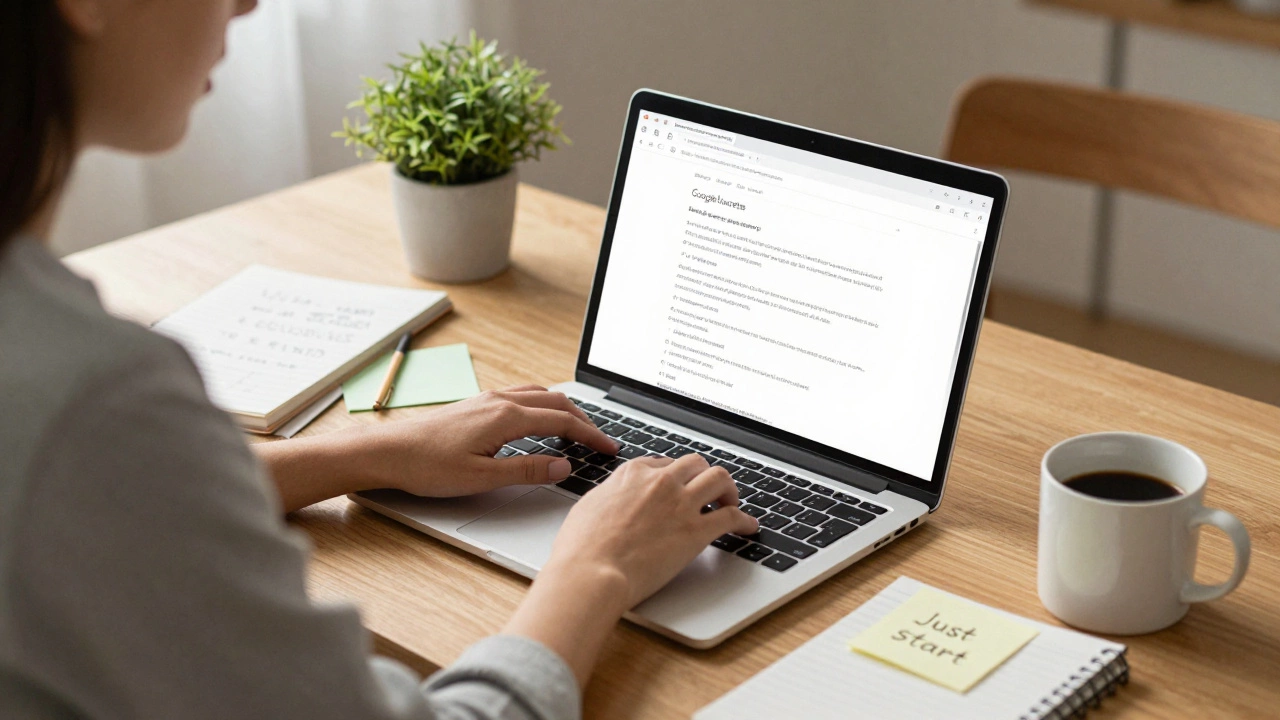
Writing your first blog post can feel overwhelming. You’re not sure what to say, how to structure it, or if anyone will even read it. But here’s the truth: write blog post doesn’t need to be perfect. It just needs to be real. The best blogs aren’t written by experts with fancy degrees-they’re written by people who care enough to share what they’ve learned, even if they’re still learning.
Start with a question you actually want to answer
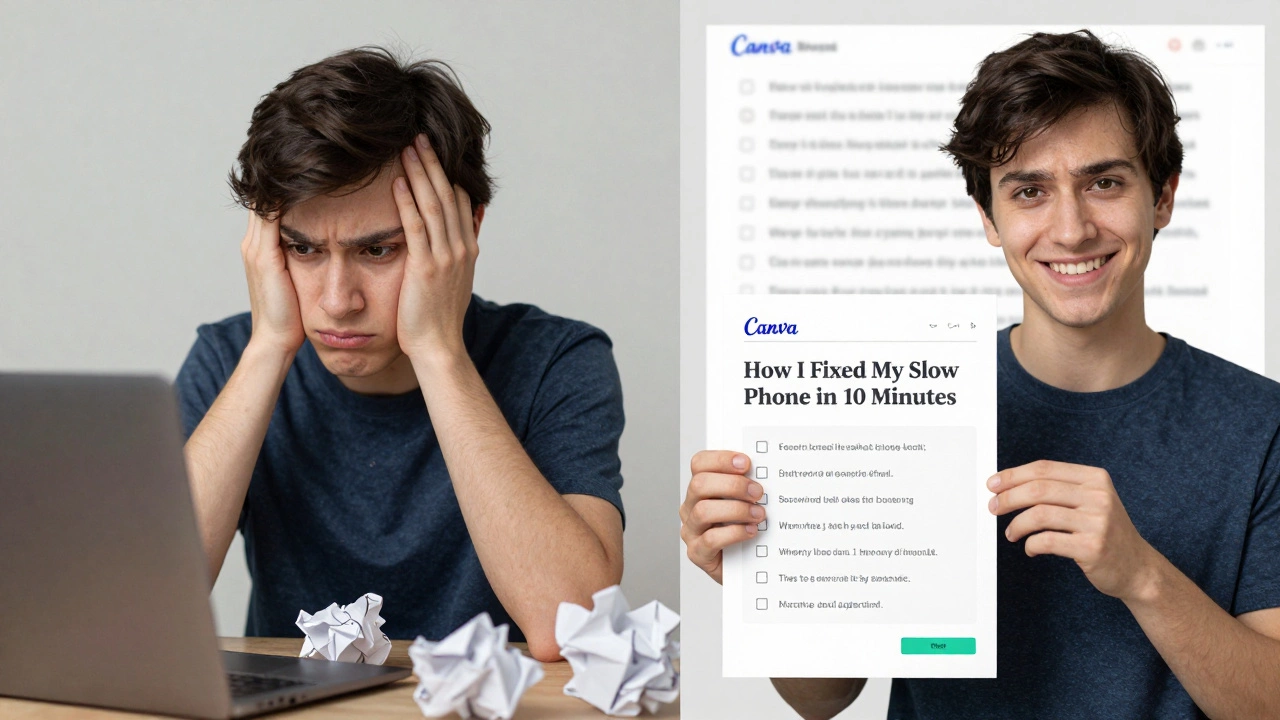
Don’t begin by asking, "What should I write about?" Instead, ask yourself, "What’s something I figured out recently that I wish I’d known six months ago?" That’s your topic. Maybe you finally figured out how to organize your email inbox, or you learned how to make perfect scrambled eggs without burning them. Those are blog posts. People search for solutions to tiny, everyday problems. Your experience is valuable-even if it seems small.Look at your own life. What confused you? What took longer than it should have? What did you Google three times before you got it right? That’s your goldmine. A post titled "How I Fixed My Slow Phone in 10 Minutes (No App Needed)" got more traffic than a 2,000-word guide on "The Future of Mobile Technology." Real problems beat abstract ideas every time.
Keep it simple-no jargon, no fluff
Beginners often think they need to sound smart. They use words like "leverage," "synergize," or "utilize." Stop. Use the same words you’d use talking to a friend over coffee. If you wouldn’t say it out loud, don’t write it.Here’s a trick: read your draft aloud. If you stumble over a sentence, rewrite it. If you catch yourself saying "as mentioned previously," delete it. Your reader isn’t looking for a lecture. They’re looking for a clear path from "I’m stuck" to "I get it."
Break long paragraphs into short ones. Two or three sentences max. Use bullet points when you can. People don’t read blogs like novels-they scan. Make it easy for them to find the answer fast.
Structure your post like a conversation
A good blog post follows a simple rhythm:- Start with the problem: "Ever feel like you’re wasting hours on social media and still not getting results?"
- Share your story: "I used to do the same thing-until I tried this one thing."
- Give the solution step by step: "Here’s what I did. Step 1:... Step 2:..."
- End with a win: "After two weeks, I saved 5 hours a week. Here’s how you can too."
This structure works because it mirrors how people learn. They need to feel understood first. Then they need to see you’ve been where they are. Then they need clear steps. Don’t skip any part.
Write like you’re helping one person
Stop thinking about "audience." Think about one person. Maybe it’s Sarah, a 32-year-old mom in Perth who works full-time and wants to start a blog but doesn’t know where to begin. Write for her. Use her language. Answer her silent questions.What’s she worried about? "Will this take too long?" "Do I need to be a writer?" "What if no one reads it?" Address those fears directly. Say: "You don’t need to be a writer. You just need to be honest." That’s all.
When you write for one person, your tone becomes natural. Your advice becomes specific. Your post stops sounding like a textbook and starts sounding like a friend who’s been there.
Use real examples-not hypotheticals
Instead of saying, "Some people find that editing their posts helps," say, "Last week, I edited my post about meal prep. I cut 300 words. My read time dropped from 4 minutes to 2 minutes. Engagement went up 22%." Real numbers. Real results. Real context.Even if your example is small, it’s powerful. "I tried posting at 7 a.m. instead of 9 p.m. My clicks went up 15%." That’s the kind of detail that sticks. People don’t remember theories. They remember what worked for someone just like them.
Don’t chase perfection-just hit publish
The biggest mistake beginners make? Waiting for the perfect post. They rewrite the intro five times. They tweak the title for three days. They check grammar with three different tools. Then they never publish.Here’s the secret: your first post will be messy. So will your tenth. And your fiftieth. That’s normal. The goal isn’t perfection. It’s progress. Publishing teaches you more than any course ever will.
Set a timer for 45 minutes. Write your post. Proofread once. Hit publish. Then move on. You’ll learn more from one published post than from ten drafts stuck in your notes app.
Use free tools to make it easier
You don’t need expensive software to write a good blog post. Here’s what actually works:- Google Docs for writing-it’s simple, saves automatically, and lets you share with friends for feedback.
- Grammarly Free to catch obvious grammar mistakes.
- Canva to make a simple header image. No design skills needed.
- Headline Analyzer by CoSchedule to check if your title will get clicks.
- Google Trends to see if people are actually searching for your topic.
These tools cost nothing. But they remove friction. And friction is what stops beginners from starting.
Read other blogs-but don’t copy
Find three blogs you like. Not the big ones with millions of followers. The small ones. The ones written by someone who’s just a few steps ahead of you. Read them. Notice how they write. How they start. How they end. What they leave out.Then write your own version. Don’t try to sound like them. Use their structure as a template, not a script. Your voice is your superpower. No one else has it.
Expect silence at first-then keep going
Your first post might get five views. Maybe none. That’s okay. Blogging isn’t a sprint. It’s a slow build. Most bloggers quit before they hit 20 posts. Don’t be one of them.Focus on consistency, not traffic. Write one post a week. Even if it’s short. Even if it’s simple. Over time, those posts add up. Google notices. Readers notice. And then-slowly-you start to see results.
What to do next
Ready to write your first post? Here’s your checklist:- Pick one small problem you solved recently.
- Write it in plain language-like you’re talking to a friend.
- Use short paragraphs and bullet points.
- Include one real example or result.
- Set a 45-minute timer and finish it.
- Hit publish.
That’s it. You don’t need more. You don’t need to be perfect. You just need to start.
Do I need to be a good writer to start a blog?
No. You don’t need to be a good writer-you just need to be clear. Most successful bloggers aren’t professional writers. They’re people who figured something out and shared it simply. Focus on being helpful, not fancy. Clarity beats poetry every time.
How long should a blog post be for beginners?
Start with 500-800 words. That’s long enough to explain something properly, but short enough to finish in one sitting. Don’t aim for 2,000 words just because you heard that’s "ideal." Long posts only work if you have something meaningful to say. Better to write a clear 600-word post than a bloated 1,500-word one.
How often should I post as a beginner?
Once a week is ideal. It’s frequent enough to build momentum, but not so often that you burn out. If that’s too much, once every two weeks is fine. Consistency matters more than frequency. One post every week for six months beats six posts in one week and then nothing for months.
Should I use images in my blog posts?
Yes, but keep it simple. You don’t need professional photos. A screenshot, a quick Canva graphic, or even a photo from your phone works. Images break up text and help people understand faster. Just make sure they’re relevant. A random stock photo of a person thinking doesn’t help. A screenshot of your actual workflow does.
What if no one reads my blog?
That’s normal-at first. Most blogs get zero traffic for the first three to six months. That doesn’t mean you’re failing. It means you’re building. Focus on writing for yourself and the one person who might benefit. Traffic comes later. The real win is that you showed up, wrote something real, and didn’t quit.
Don’t wait for inspiration. Don’t wait for the perfect moment. Start now-with one post, one idea, one honest sentence. That’s how good blogs begin.