
Wix Ownership Quiz
Test your knowledge about Wix ownership and global presence
Question 1: Which country owns Wix?
Question 2: Where is Wix's headquarters located?
Question 3: What is the purpose of Wix's Bangalore office?
Question 4: Is Wix safe to use in India?
Question 5: Which languages does Wix support for Indian users?
Wix isn’t owned by India. It isn’t owned by the U.S., China, or any other country you might guess. Wix is an Israeli company. Headquartered in Tel Aviv, it was founded in 2006 by Avishai Abrahami, Nadav Abrahami, and Giora Kaplan. That’s it. No parent company in another country. No foreign acquisition. Wix is proudly, officially, Israeli.
Why Do People Think Wix Belongs to Another Country?
It’s easy to get confused. Wix works everywhere. You can build a website in Hindi, Spanish, or Mandarin. Its templates look like they could’ve been made for a business in Mumbai, Toronto, or Melbourne. Plus, Wix has offices in the U.S., Germany, Japan, and yes - India. The company opened its Bangalore office in 2015 to serve the growing South Asian market. That office handles customer support, design, and some product development. But owning a branch doesn’t mean owning the whole company.
Think of it like McDonald’s. Just because there’s a McDonald’s in Delhi doesn’t mean India owns McDonald’s. Same logic applies to Wix. The Indian office is a local team, not a parent entity. Many Indian users assume Wix is Indian because it’s so popular here. But popularity doesn’t equal ownership.
Wix vs. WordPress: Different Roots, Same Goal
People often compare Wix to WordPress, especially when they’re choosing a website builder. WordPress started in 2003 as an open-source project by Matt Mullenweg and Mike Little. It’s maintained by a global community. The WordPress Foundation doesn’t own it - anyone can contribute. Wix, on the other hand, is a closed, proprietary system. You can’t download or modify its core code. You pay for the platform, and they host it.
That difference matters. If you’re using WordPress themes from India, you’re probably using plugins or templates built by Indian developers. Those are third-party. Wix doesn’t have third-party themes in the same way. All Wix templates are created and updated by Wix’s own team in Tel Aviv. Even if you pick a template that looks like it’s designed for an Indian restaurant or a Delhi-based blogger, it’s still made by an Israeli company.
How Wix Grew From Israel to Global Dominance
Wix didn’t start big. In 2009, it had fewer than 10 employees. By 2013, it had over 1 million users. Today, it powers over 230 million websites worldwide. That growth wasn’t luck. Wix invested heavily in user-friendly design. It dropped the need for coding. It built drag-and-drop tools that even a 12-year-old could use. And it did all this from Tel Aviv.
Its success in India came later. In 2017, Wix started running local marketing campaigns in Hindi and Tamil. It partnered with Indian influencers and offered free domain names for the first year. That’s when Indian small businesses - from chai stalls to boutique designers - started using Wix in droves. By 2023, over 12 million Indian websites were built on Wix. But again: those websites are hosted on Israeli servers, managed by Israeli engineers, and updated by Israeli product teams.
What About Wix’s Indian Office? What Do They Actually Do?
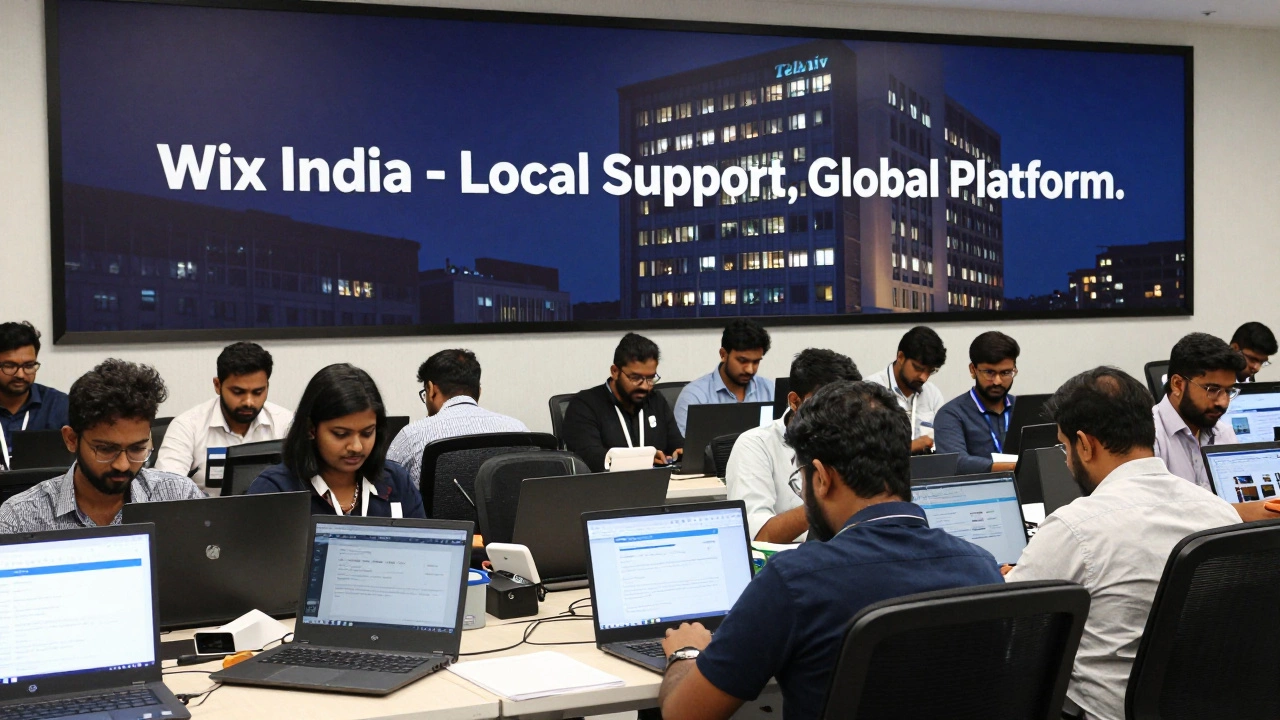
The Bangalore office has around 400 employees as of 2025. Their main jobs are customer service, localization, and some UI testing. They translate help articles into Hindi, Bengali, and Tamil. They test how Wix looks on low-bandwidth networks common in rural India. They help design localized templates - like ones with Diwali themes or wedding banners.
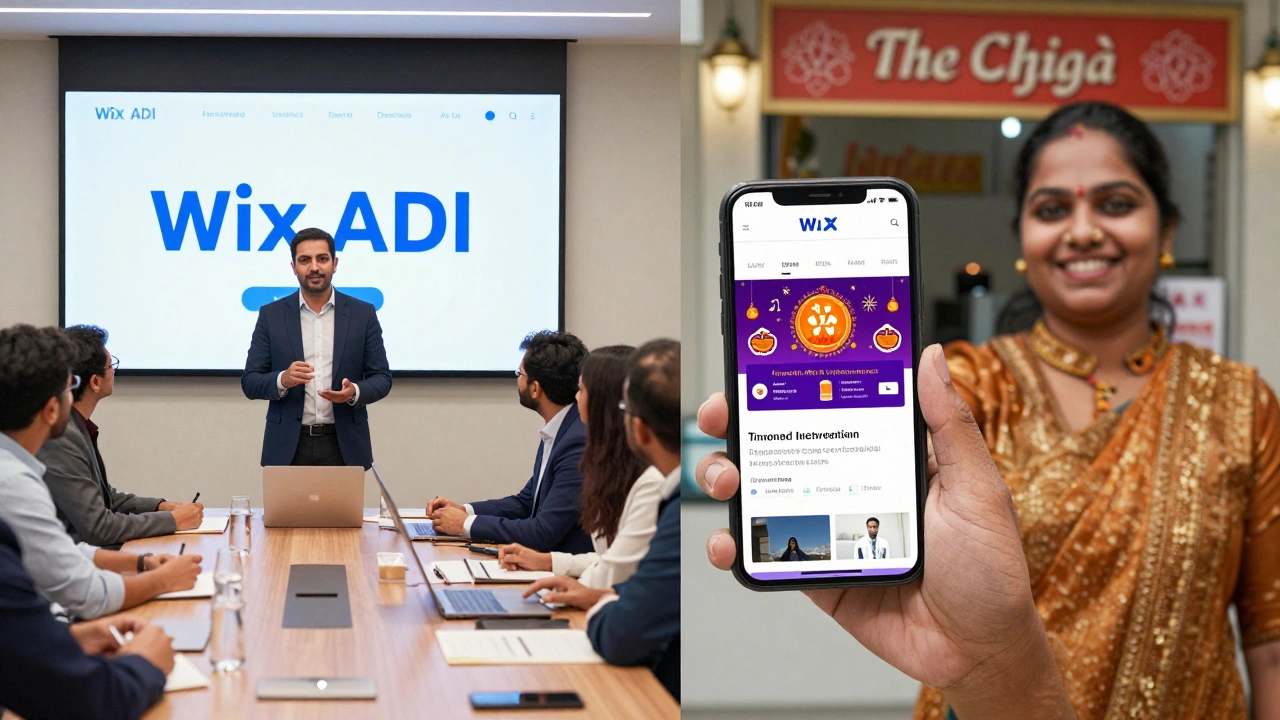
But here’s what they don’t do: they don’t make core decisions. They don’t control pricing. They don’t decide when to roll out new features. That all happens in Tel Aviv. Even the AI tools like Wix ADI (Artificial Design Intelligence) were developed in Israel. The Indian team uses them. They don’t build them.
Why Ownership Matters for Indian Users
For most users, it doesn’t matter where Wix is headquartered. But for businesses thinking long-term, it does. If you’re building a professional website, you want to know who’s behind it. Israel has strong data protection laws. Wix complies with GDPR, India’s DPDP Act, and other global standards. That means your customer data is handled securely, no matter where you’re based.
Also, if Wix were owned by a company in a country with unstable tech policies, you’d have risk. That’s not the case here. Israel has one of the most advanced tech ecosystems in the world. It’s home to over 6,000 startups. Wix is one of its biggest success stories. That stability matters if you’re planning to scale your business.
Wix’s Legal and Financial Base
Wix is publicly traded on the NASDAQ under the ticker WIX. Its financial reports are filed with the U.S. Securities and Exchange Commission. Its headquarters are in Tel Aviv. Its legal entity is Wix.com Ltd. - registered in Israel. Its CEO, Dan Harari, is Israeli. Its board of directors is mostly Israeli and American. There’s no foreign ownership. No Chinese investors. No Indian holding company. Just one clear owner: Wix.com Ltd., based in Israel.
What If You Want an Indian-Made Alternative?
If you’re looking for a website builder made in India, there are a few. Sites like Webflow (U.S.-based) and Wix (Israeli) dominate, but Indian startups like Udaan and Indiamart offer simple website tools for small sellers. However, none have the same reach or features as Wix. Even WordPress - often thought of as Indian because of its massive local plugin ecosystem - is American-made.
There’s no true Indian equivalent to Wix yet. But that’s changing. Indian developers are building tools that integrate with Wix - like payment gateways for UPI or GST-compliant invoice templates. But again, those are add-ons. The platform itself? Still Israeli.
Final Answer: Wix Is Israeli
Wix is owned by Israel. Not India. Not the U.S. Not any other country. It was built in Tel Aviv, funded by Israeli investors, and run by Israeli leadership. The fact that millions of Indians use it doesn’t change that. It just shows how good the product is.
If you’re using Wix to build your blog, online store, or portfolio - you’re using an Israeli tool. And that’s okay. In fact, it’s a good thing. Israel’s tech scene is known for innovation, security, and reliability. You’re not just getting a website builder. You’re getting a product shaped by a country that’s spent decades mastering digital infrastructure.
Is Wix owned by India?
No, Wix is not owned by India. It is owned by Wix.com Ltd., a company headquartered in Tel Aviv, Israel. While Wix has an office in Bangalore to serve Indian customers, the company itself is Israeli and operates independently.
Where is Wix’s headquarters located?
Wix’s headquarters is in Tel Aviv, Israel. This is where the company was founded in 2006 and where its core product, engineering, and leadership teams are based.
Does Wix have offices in other countries?
Yes, Wix has offices in the United States (New York), Germany (Berlin), Japan (Tokyo), and India (Bangalore). These offices handle local support, marketing, and some development work, but they do not control the company’s ownership or core product decisions.
Is Wix safe to use in India?
Yes, Wix is safe to use in India. It complies with India’s Digital Personal Data Protection (DPDP) Act, GDPR, and other international data privacy standards. Its servers are secured, and its data handling practices are audited regularly - regardless of where the user is located.
Can I build a website in Hindi using Wix?
Yes, Wix supports over 20 languages, including Hindi, Tamil, Bengali, and others. You can create entire websites in Hindi using Wix’s built-in translation tools and localized templates designed for Indian users.
Is Wix better than WordPress for Indian users?
It depends. Wix is easier for beginners and requires no coding. WordPress offers more flexibility and control, especially if you want to use Indian-made plugins or themes. Wix is better for quick, clean websites. WordPress is better if you plan to scale deeply or customize heavily.