Five years ago, if you wanted to start a blog, you had two real choices: WordPress.org or Blogger. Today? The landscape has exploded. People aren’t just writing blogs anymore-they’re building communities, selling products, launching podcasts, and even turning their writing into full-time businesses. So where are they actually doing it? The answer isn’t one platform. It’s a mix, shaped by what kind of blogger you are.
WordPress.org Still Leads, But Not for Everyone
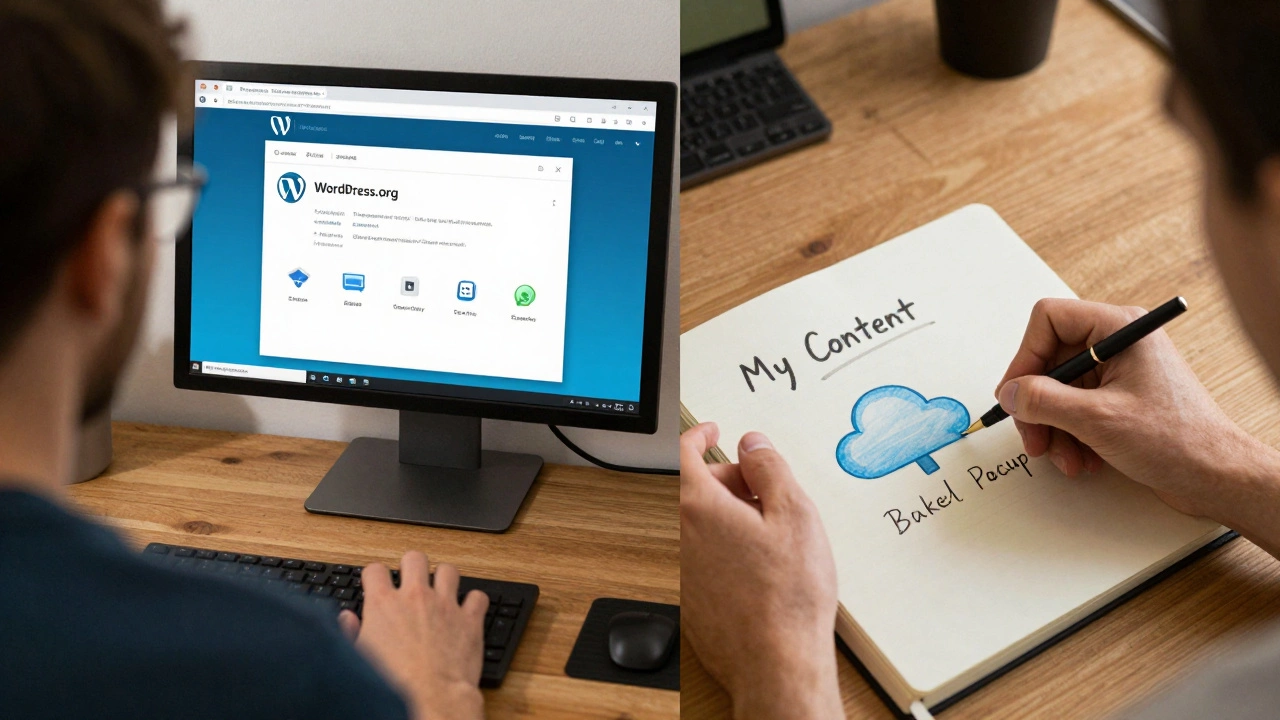
WordPress.org powers over 43% of all websites on the internet. That’s not a typo. It’s still the most popular choice for serious bloggers. Why? Because it gives you total control. You pick your host, your theme, your plugins. You own your content. No one can shut it down. That’s why professional writers, journalists, and niche experts stick with it. But here’s the catch: it’s not simple. You need to buy hosting, install WordPress, manage updates, and deal with security. If you’re not tech-savvy, it’s a hassle. Still, if you’re serious about long-term growth, WordPress.org is the only platform that scales with you.
Medium Is for Writers Who Want to Be Seen
Medium isn’t a place to build your own brand-it’s a place to get discovered. Over 100 million people read on Medium every month. Writers use it to test ideas, reach audiences they’d never attract on their own, and sometimes even get picked up by publishers. The platform handles everything: design, hosting, monetization through the Partner Program. You just write. But here’s the trade-off: you don’t own your audience. If Medium changes its algorithm or shuts down your account, you lose everything. It’s great for experimentation. Terrible if you want to build a loyal following under your own name.
Substack Is the Email-First Revolution
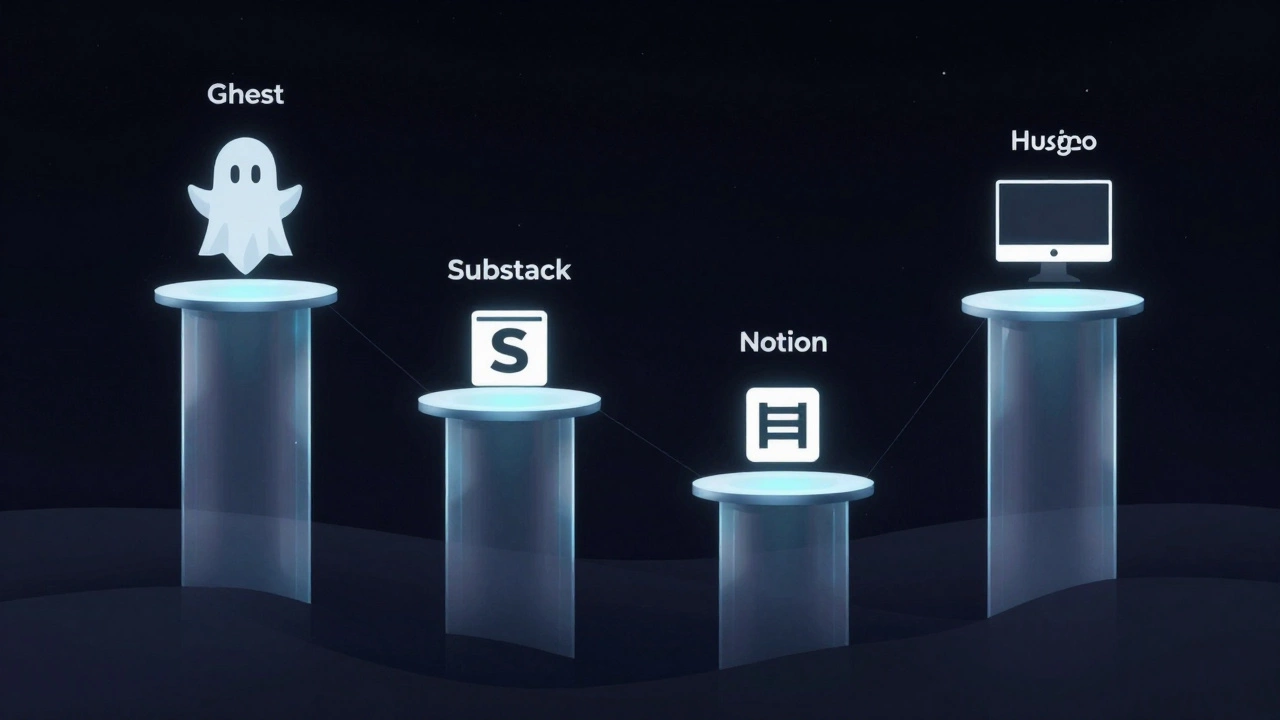
Substack exploded after 2020, and it’s still growing. Why? Because it turns blogging into a newsletter business. Writers don’t just post articles-they build paid subscriptions. Over 150,000 newsletters now run on Substack, with creators earning millions. It’s perfect for experts who already have an email list or want to start one. You write, your readers pay you directly. No ads. No algorithms. Just you and your audience. But Substack doesn’t help you get found. If you don’t already have a following, you’ll struggle to grow. It’s not a discovery platform. It’s a membership engine.
Ghost Is the Quiet Powerhouse for Designers
If you care about clean design, fast loading, and zero bloat, Ghost is your quiet favorite. It’s built by bloggers, for bloggers. No plugins. No clutter. Just beautiful, fast posts that load in under a second. It’s popular with designers, developers, and creatives who want their writing to shine without distractions. Ghost also has built-in membership tools, so you can charge for content. It’s not as big as WordPress or Medium, but it’s growing fast among people who hate slow, clunky blogs. The downside? It’s paid-only. You can’t start for free. But if you’re willing to pay $9/month, you get one of the cleanest, most reliable blogging experiences out there.

Notion Is the Wildcard
Notion? Yes. Notion isn’t a blog platform. But thousands of people are using it as one. Why? Because it’s flexible. You can build a blog with databases, toggle sections, embedded videos, and custom layouts-all in one place. It’s perfect for visual thinkers, educators, and people who want their blog to double as a knowledge base. You can share it publicly, and it looks professional. But it’s not built for SEO. Pages load slowly. Search engines struggle to index them. And if you stop paying for Notion, you lose access. It’s a hack. Not a solution. But for some, it works.
Self-Hosted Static Sites Are Rising Fast
More people are building blogs with tools like Astro, Hugo, or Next.js. These are static site generators-you write in Markdown, push to GitHub, and your blog auto-deploys. No databases. No WordPress updates. No plugins to break. Just pure speed and security. Sites like this load instantly and are nearly impossible to hack. They’re popular with developers, tech writers, and people who want full control over every pixel. The catch? You need to know how to use Git, command lines, and basic code. It’s not for beginners. But if you’re comfortable with tech, it’s the most future-proof option out there.
What About TikTok, Instagram, and LinkedIn?
Yes, people are writing long-form content on LinkedIn. Yes, some are turning TikTok captions into blog posts. But these aren’t blogs. They’re snippets. A blog is a place you own. A LinkedIn post? It’s a post on someone else’s platform. Algorithms change. Features disappear. You don’t own your audience. If you want to build something lasting, you need your own space. Social media is great for promotion. But not for hosting your core content.
So Where Should You Write Your Blog?
Let’s cut through the noise. Here’s a simple guide:
- If you want control, scalability, and full ownership → Use WordPress.org with a reliable host like SiteGround or Kinsta.
- If you’re just starting and want to get readers fast → Try Medium to test ideas, then move to your own site.
- If you have an email list or want to charge for content → Go with Substack.
- If design and speed matter more than features → Try Ghost.
- If you’re tech-savvy and want zero maintenance → Build a static site with Hugo or Astro.
- If you’re experimenting and love flexibility → Use Notion-but know it’s temporary.
There’s no single "best" platform. The right one depends on your goals. Are you writing for fun? For money? To build authority? To escape algorithms? Your answer decides your platform.
What Most Beginners Get Wrong
Most new bloggers waste months switching platforms. They start on Blogger. Then Medium. Then WordPress. Then Notion. Then they quit. Why? Because they’re chasing perfection instead of progress. The truth? You don’t need the best platform. You need a platform that gets you writing. Start simple. Write 10 posts. Learn what you like. Then move to something better. The platform doesn’t make you a blogger. Your consistency does.
Final Thought: Own Your Space
No matter which platform you pick today, always keep a backup. Export your content. Store it somewhere safe. Because platforms come and go. Medium could change its rules tomorrow. Substack might raise prices. WordPress plugins could break. But if you own your content-your words, your images, your ideas-you can move anywhere. That’s the real advantage. Not the tool. The content.