
What does it mean to be rich in India? It’s not the same as in the U.S. or Europe. A salary of ₹1 lakh per month might feel like luxury in Mumbai, but in Delhi or Bangalore, it’s just average for a mid-level professional. And in smaller cities? That’s more than enough to live like royalty. The idea of being rich isn’t about a number-it’s about what that number buys you, where you live, and what kind of life you can afford.
There’s no single number for "rich" in India
People often ask for a clear cutoff-"Is ₹50,000 rich? Is ₹2 lakh rich?" But the answer isn’t that simple. India’s cost of living varies wildly. A ₹75,000 monthly salary in Jaipur gives you a three-bedroom house, a car, private school for kids, and savings. In South Mumbai, that same salary barely covers rent and groceries. So "rich" isn’t a number-it’s a lifestyle.
According to a 2024 report by the National Council of Applied Economic Research (NCAER), households earning more than ₹1.2 lakh per month are in the top 5% of Indian earners. But even within that group, lifestyles differ. One family might splurge on foreign trips every year. Another saves every rupee to buy property in their hometown. Richness isn’t just about spending-it’s about freedom from financial stress.
What does ₹1 lakh per month actually buy you?
Let’s break down a ₹1 lakh monthly income in a Tier-1 city like Bangalore or Hyderabad:
- Rent: ₹25,000-₹40,000 for a 2BHK in a decent area
- Utilities and internet: ₹3,000
- Groceries and household: ₹15,000
- Transport: ₹8,000 (fuel, maintenance, or ride-hailing)
- Children’s education: ₹10,000-₹20,000 (private school fees)
- Entertainment and dining: ₹8,000
- Savings and investments: ₹15,000-₹30,000
That leaves you with ₹10,000-₹25,000 to spare. Not luxury, but stability. You can afford a yearly vacation, emergency funds, and maybe even start a small business. This is where most people in India feel financially secure. And for many, that’s rich.
₹2 lakh+ per month: The real luxury tier
If you’re earning ₹2 lakh or more per month, you’re in the top 1-2% of earners. This is where "rich" starts to look different.
In Delhi, a ₹2.5 lakh income might mean:
- 3BHK in South Delhi or Gurgaon: ₹60,000
- Two cars: ₹20,000 (EMI + fuel + insurance)
- Private school for two kids: ₹30,000
- Domestic help: ₹10,000
- Weekly dining out and travel: ₹20,000
- Investments and insurance: ₹50,000
- Leftover: ₹30,000-₹50,000
At this level, you’re not just covering expenses-you’re building wealth. You can afford a second home, international travel, private healthcare, and even start a small enterprise. You don’t worry about medical bills. You don’t count every rupee spent on groceries. That’s the real definition of rich in India: not having to make trade-offs.

Small cities, big freedom
Here’s the twist: ₹50,000 per month in a Tier-2 city like Indore, Coimbatore, or Bhopal feels like being rich. Rent? ₹10,000-₹15,000 for a nice apartment. A car? ₹15,000 including EMI and fuel. Private school? ₹8,000. Groceries? ₹10,000. That leaves ₹10,000-₹15,000 to save or invest.
Many professionals in these cities-engineers, teachers, doctors, or remote workers-earn ₹50,000-₹75,000 and live better than their peers in Mumbai or Delhi. They own homes, send kids to good schools, take family trips, and still have money left over. In fact, the real financial freedom in India often comes not from high salaries, but from low costs.
What about rural India?
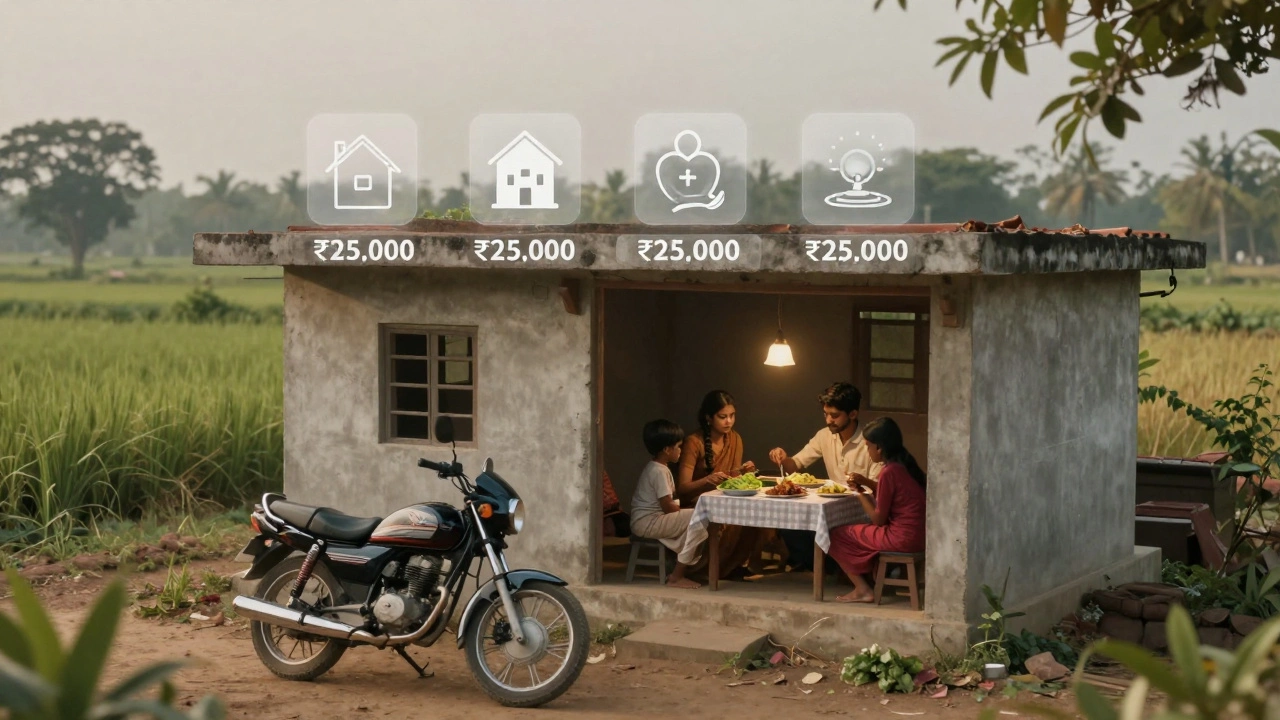
In rural areas, even ₹25,000 per month can be considered wealthy. Most families there live on ₹8,000-₹15,000. A salary of ₹25,000 means you can afford:
- A concrete house with a toilet and running water
- A motorcycle or small car
- Education for children beyond Class 8
- Access to private healthcare
- Regular meals with protein and vegetables
That’s not just comfort-it’s upward mobility. In many villages, people earning ₹25,000 a month are seen as successful, even if they’re not rich by metro standards. Wealth in rural India is measured in security, not status.
Why income isn’t the whole story
Many people confuse income with wealth. A doctor earning ₹3 lakh per month might have ₹80 lakh in student loans. A startup founder might make ₹1.5 lakh but owe ₹2 crore in investor debt. Meanwhile, a retired government employee living on ₹40,000 a month owns their home, has no debt, and saves ₹20,000 monthly. Who’s richer?
Net worth matters more than gross income. In India, owning property-especially in a city-is the true marker of financial strength. Many people earning ₹1.5 lakh a month rent. Others earning ₹60,000 own two apartments. The latter are wealthier, even if they earn less.
Also, family support changes everything. In many Indian households, multiple generations live together. Rent, food, and utilities are shared. That means ₹50,000 can stretch further than it would for a single person in a Western country. Your "rich" salary might be someone else’s "normal."
The hidden cost of being rich
Being rich in India comes with pressure. If you earn ₹2 lakh a month, people expect you to pay for weddings, fund relatives’ education, or lend money to extended family. Social expectations can drain your savings faster than your spending habits.
Many high earners in India live paycheck to paycheck-not because they spend too much, but because they give too much. They buy cars for cousins, pay for siblings’ MBA fees, or fund weddings for distant relatives. That’s not weakness-it’s cultural. But it means "rich" doesn’t always mean "financially free."
What rich looks like in 2025
In 2025, the definition of rich is shifting. More people are working remotely for global companies. A software engineer in Pune earning ₹1.8 lakh per month might be paid in USD. That’s the new kind of rich: not just high income, but global income.
Also, digital businesses are changing the game. A content creator in Ahmedabad making ₹1.2 lakh/month from YouTube and affiliate marketing doesn’t need a corporate job. They’re rich on their own terms.
And then there’s the silent majority: people who never earned more than ₹50,000 but built a small business-maybe a bakery, a tutoring center, or a repair shop-that now brings in ₹80,000-₹1 lakh monthly. They’re not on LinkedIn. No one writes about them. But they’re richer than 90% of the urban population.
Final takeaway: Rich is freedom
There’s no magic number. But if you’re earning enough to:
- Save 20-30% of your income every month
- Pay for emergencies without borrowing
- Send your kids to a good school without stress
- Take a vacation without planning for a year
- Own your home or have a clear path to owning one
Then you’re rich in India. Not because of your bank balance. But because you have control over your life.
Most people chase higher salaries. But the real win is building a life where money doesn’t dictate your choices. That’s what rich means today.
Is ₹50,000 a good salary in India?
In Tier-2 or Tier-3 cities, ₹50,000 is more than enough to live comfortably and save. In Mumbai or Delhi, it’s tight but doable if you share housing or live outside the city center. It’s not "rich," but it’s above average and provides financial stability.
What salary puts you in the top 1% in India?
To be in the top 1% of earners in India, you typically need a monthly income of ₹3 lakh or more. This includes senior executives, top doctors, successful entrepreneurs, and high-performing tech professionals. However, net worth matters more-many in the top 1% own property, investments, and businesses, not just salary.
Can you be rich without a high salary?
Yes. Many people in India are rich not because of their salary, but because they own assets. A small business owner earning ₹80,000/month but owning three properties in their hometown is wealthier than a ₹2 lakh salary earner who rents everything. Wealth is what you own, not just what you earn.
Is ₹1 lakh per month enough to retire in India?
If you own your home and have no debt, ₹1 lakh per month is more than enough to retire comfortably in most parts of India. In Tier-2 cities, you could live well on ₹50,000-₹70,000. The key is having low expenses and no dependents relying on you. Social security doesn’t exist, so savings and property are your safety net.
Why do some people earn a lot but still feel poor?
Many high earners in India face pressure to support extended family, pay for weddings, fund education, or maintain a certain lifestyle. They might earn ₹2 lakh but spend ₹1.8 lakh on social obligations. Debt, inflation, and lack of financial planning can also make high income feel like constant stress. Rich isn’t just about money-it’s about control.