Most blogs die before they even get started-not because the content is bad, but because the opening doesn’t grab anyone. You’ve got three seconds to make someone care. After that, they’re gone. That’s not opinion. That’s data from Hotjar and Google Analytics showing 60% of readers bounce within the first 10 seconds if the first line doesn’t pull them in.
So how do you write a killer opening? It’s not about fancy words or poetic flair. It’s about hitting the right nerve, fast. Here’s how to do it.
Start with a problem they already feel
People don’t read blogs to hear what you know. They read because they’re stuck on something. Your opening needs to name that pain point out loud.
Instead of: “Welcome to my blog about productivity.”
Try: “You’ve got five minutes before your next meeting, and your to-do list is still a mess. Again.”
That’s not writing. That’s reflection. And it works because the reader thinks, “How does she know?” You’re not telling them something new-you’re mirroring what they already feel. That creates instant connection.
Look at your niche. What’s the #1 frustration people have? Write that down. Then write your first sentence around it. No fluff. No intro. Just the raw, real problem.
Use the “What if?” hook
Our brains are wired to respond to hypotheticals. A simple “What if?” can make someone pause and imagine a different reality.
What if you could write a blog post in 20 minutes-and still get 10,000 views?
What if your morning routine didn’t leave you drained, but actually energized you?
What if your blog could earn you $500 a month while you slept?
These aren’t promises. They’re invitations. They open a mental door. And once that door is open, the reader keeps reading to find out how it’s possible.
Use this trick when you’re writing about transformation-whether it’s time, money, confidence, or results. The “What if?” hook doesn’t need to be grand. It just needs to feel real enough to matter.
Drop a surprising fact or stat
People trust data, even if they don’t understand it. A single surprising number can stop the scroll.
“92% of bloggers quit within 90 days-not because they ran out of ideas, but because they never got their first 100 readers.”
“The average person reads the first 3 lines of a blog post. Then they decide if it’s worth their time.”
“Blogs with hooks in the first sentence get 3x more shares than those that don’t.”
You don’t need to be a researcher. Just Google “[your niche] + statistic” and look for something that shocks you. Then use it. Even if it’s not perfect, it creates curiosity. And curiosity beats boredom every time.
Pro tip: Cite the source if you can. Even saying “according to a 2025 survey of 5,000 bloggers” adds weight. People don’t need the link-they need to know it’s not made up.
Ask a bold, uncomfortable question
Questions force the brain to answer. Even if it’s silent. Even if it’s just in their head.
“Are you secretly tired of pretending you’re ‘just getting started’?”
“How many times have you deleted your draft because you thought it wasn’t good enough?”
“What if your blog isn’t failing because you’re not good enough… but because you’re starting wrong?”
These aren’t polite questions. They’re the kind that make people pause. They cut through the noise because they’re honest. And honesty builds trust faster than any sales pitch.
Don’t be afraid to make the reader feel a little exposed. That’s where change begins.

Lead with a story-not a lesson
Stories don’t just entertain. They activate parts of the brain that facts never touch. Your opening doesn’t need to be a novel. It just needs to be real.
“I wrote my first blog post in 2022. I spent three hours on it. Posted it. Checked back an hour later. Zero views. Zero comments. I cried in my kitchen. Then I deleted it.”
That’s not a lesson. That’s a moment. And it’s human.
Use a 2-3 sentence story from your own life. It doesn’t have to be dramatic. It just has to be true. The goal isn’t to impress. It’s to make them think, “I’ve been there.”
People don’t follow experts. They follow people they recognize.
Keep it short. Really short.
There’s a myth that you need to set the stage. You don’t. Readers don’t need context. They need momentum.
Bad opening: “In today’s digital age, where content is king and attention spans are shorter than ever, bloggers face a unique challenge…”
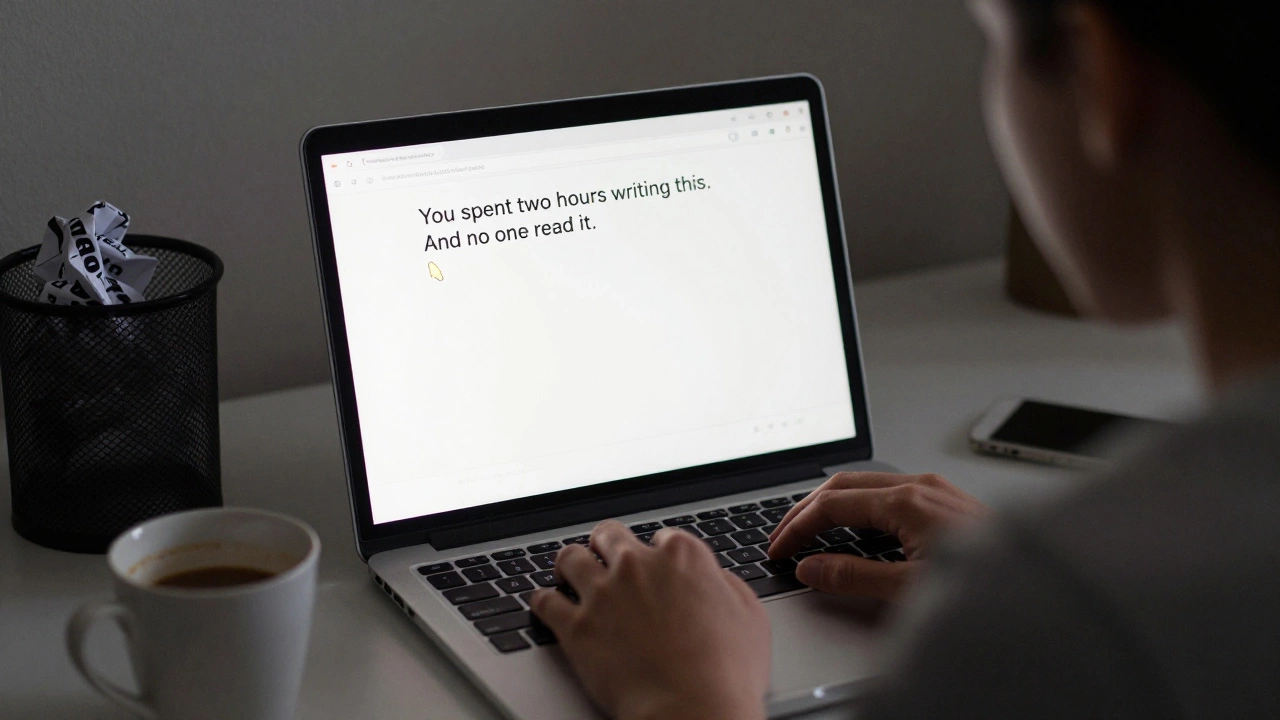
Good opening: “You spent two hours writing this. And no one read it.”
That’s 7 words. It’s brutal. It’s true. And it lands.
Cut every word that doesn’t serve the hook. If you can say it in 10 words, don’t use 15. If you can say it in 5, do it.
Short doesn’t mean shallow. It means sharp.
Test your opening with one question
After you write your first line, ask yourself: Would someone stop scrolling to read this?
If the answer is no, rewrite it. Again. And again.
Try reading it out loud. If it sounds like something you’d say to a friend over coffee, you’re on the right track. If it sounds like a textbook, scrap it.
Here’s a quick checklist for your opening:
- Does it name a real problem?
- Does it make them feel seen?
- Does it create curiosity or emotion?
- Is it under 15 words?
- Would you click it if you saw it on someone else’s blog?
If you answered yes to all five, you’ve got a killer opening.

Examples that actually work
Here are real openings from blogs that got traction:
- “I didn’t want to be a blogger. I just wanted to pay my rent.” - Personal finance blog
- “Your Instagram posts aren’t failing because of the algorithm. They’re failing because you’re posting for likes, not connections.” - Social media blog
- “I tried 7 meal prep hacks. Six of them made me hate cooking more.” - Healthy living blog
Notice the pattern? No jargon. No fluff. Just truth, tension, and a tiny spark of hope.
What happens after the opening?
The opening isn’t the whole story. It’s the first step. Once you’ve got them hooked, you need to deliver. But here’s the secret: you don’t need to have all the answers yet. You just need to show you understand the problem.
After your hook, say something like:
- “Here’s what I learned the hard way…”
- “This one change fixed everything for me…”
- “I used to think this… until I tried this.”
That’s your bridge. It turns curiosity into trust. And trust turns readers into loyal followers.
Don’t rush to the solution. Let the reader sit in the problem for a second. That’s where the real connection happens.
Stop overthinking. Start writing.
The biggest mistake? Waiting for the perfect opening. There isn’t one. There are only ones that work-and ones that don’t. And you won’t know which is which until you test it.
Write five openings for your next post. Not one. Five. Then pick the one that gives you chills when you read it aloud. That’s your winner.
Your blog doesn’t need to be perfect. It needs to be human. And the best way to be human? Start with something real.