
Blog Passive Income Calculator
Calculate Your Passive Income
Estimated Monthly Income
Note: Based on industry averages: Affiliate ($0.10-0.20 per visitor), Digital Products ($2-5 per sale), Ads ($0.50-$2.00 per 1,000 views)
How to Maximize Your Income
According to the article, the most successful bloggers use a combination of revenue streams. We recommend:
- 40% from affiliate marketing
- 30% from digital products
- 30% from ads
Most bloggers think they need to write more posts to make money. But that’s not how passive income works. Passive income on a blog isn’t about working harder-it’s about setting up systems that keep earning while you sleep. You don’t need thousands of visitors a day. You don’t need to be a celebrity. You just need the right mix of content, trust, and smart tools.
Start with content that keeps giving
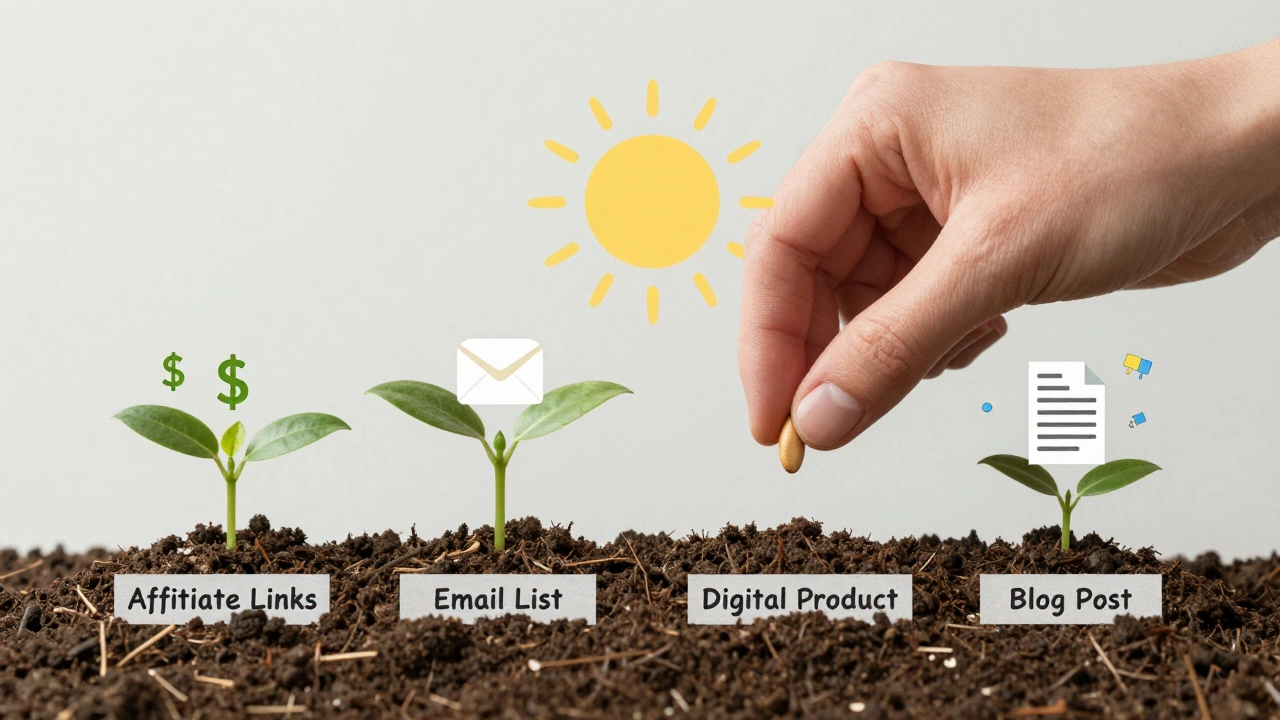
Your blog posts are like seeds. Some die after one season. Others grow roots and keep producing fruit for years. The key is to focus on evergreen topics-things people will search for five years from now. Think "how to fix a leaky faucet," "best budget running shoes," or "how to start a savings account." These don’t go out of style. They get more valuable over time.One blogger in Melbourne built a simple guide on "how to cancel a gym membership in Australia." It took him three afternoons to write. Two years later, it still gets 800 visits a month. He earns $120 a month from affiliate links to fitness equipment. That’s $1,440 a year for three hours of work.
Don’t chase trends. Build assets. Write guides that solve real, repeated problems. Then optimize them for search. Use clear headings, answer common questions in full sentences, and link to related posts. Google rewards depth, not just word count.
Use affiliate marketing the right way
Affiliate marketing is the most reliable way to make passive income from a blog. But most people mess it up. They slap links everywhere. They promote products they’ve never used. That kills trust.Instead, pick three to five products you genuinely use and love. If you run a cooking blog, recommend the knife you’ve used for five years. If you write about hiking gear, link to the backpack that survived a 300-kilometer trek in the Blue Mountains. Be specific. Say why you chose it. Mention the exact model. Include a photo.
Amazon Associates is easy to join, but the commissions are low. Better options include ShareASale, Impact, or direct affiliate programs from companies like Hostinger, Canva, or ConvertKit. These pay 30% to 50% commissions. One Sydney-based travel blogger earns $800 a month from recommending travel insurance through World Nomads. She only writes about it when it fits naturally in her trip recaps.
Always disclose affiliate links. It’s not just legal-it builds trust. People appreciate honesty more than a hidden commission.
Run ads without driving visitors away
Display ads can bring in steady cash. But bad ad placement turns readers off. You don’t want pop-ups, auto-playing videos, or banners that cover your content.Google AdSense is the most common option. It’s free to join, and it works automatically. But the payouts are low-often less than $2 per 1,000 views. For better returns, try Ezoic or Mediavine. These platforms use AI to test ad placements and maximize revenue. You need at least 50,000 monthly pageviews to join Mediavine. Ezoic accepts blogs with 10,000 views.
One food blogger in Brisbane hit 12,000 monthly views. She switched from AdSense to Ezoic. Her earnings jumped from $15 a month to $90. She didn’t change a single post. Just improved ad layout.
Place ads where people naturally pause-after the intro, between sections, or before the conclusion. Avoid putting them right after the headline. That feels pushy.
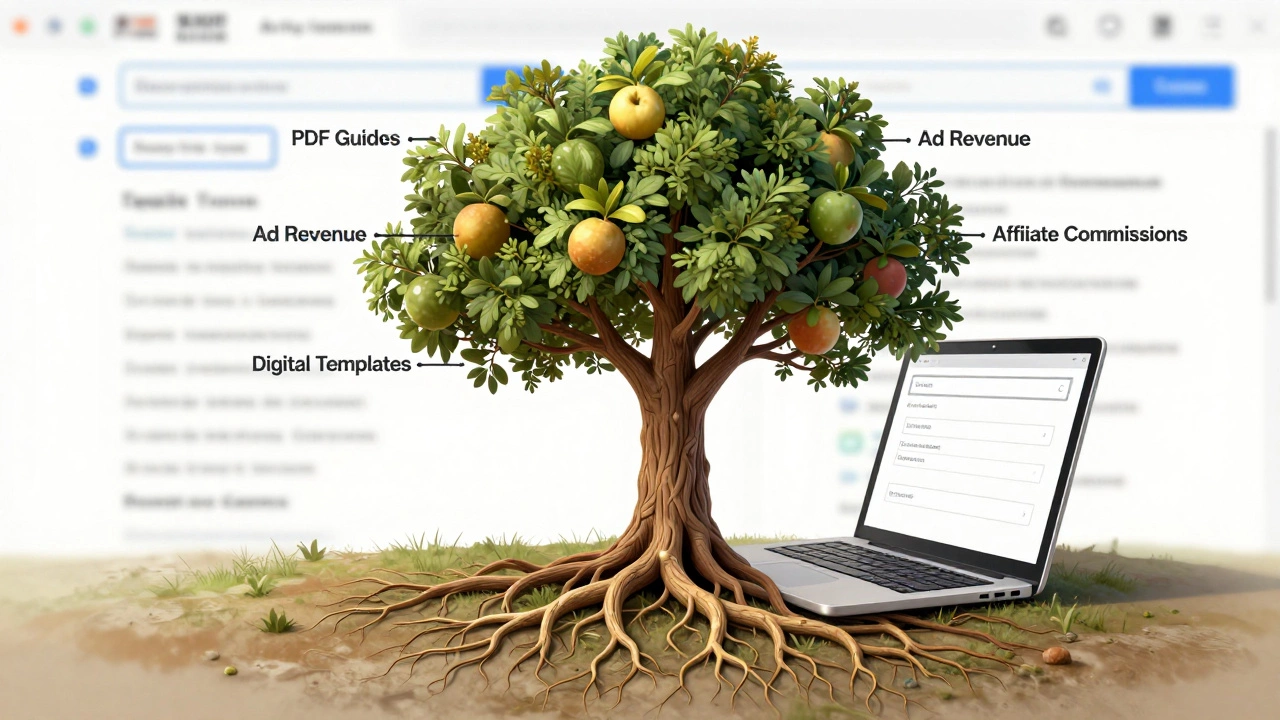
Sell digital products you already created
You’ve probably already made content that could be turned into a product. A detailed guide? A checklist? A template? Turn it into a downloadable PDF.One budgeting blogger created a simple Excel sheet for tracking household expenses. She turned it into a $12 downloadable template. She wrote one blog post explaining how to use it. That post now brings in 3,000 visits a month. She sells 40 copies a month. That’s $480 in passive income-no ads, no affiliates, no ongoing work.
You don’t need fancy tools. Use Gumroad, Ko-fi, or even PayPal to sell digital files. Upload your PDF, set the price, and link to it from your blog. Promote it in your email list, in your bio, and at the end of relevant posts.
Best digital products for blogs:
- Printable meal planners
- Checklists for home maintenance
- Spreadsheets for budgeting or tax tracking
- PDF guides on niche topics (e.g., "How to grow herbs in a Sydney apartment")
- Lightweight e-books under 30 pages
Keep the price low-$5 to $20. People are more likely to buy something cheap and simple than an expensive course.
Build an email list that earns while you sleep
Your email list is your most valuable asset. It’s the one thing no algorithm can take away.Start by offering a freebie-a checklist, a short guide, or a discount code-in exchange for an email. Use MailerLite or Beehiiv. They’re affordable and easy to use.
Once you have subscribers, send one email a week. Share a tip, link to a new post, or promote your digital product. Don’t spam. Don’t sell every day. Be helpful.
One parenting blogger in Perth built a list of 12,000 subscribers by offering a free "10-Minute Toddler Meal Plan." Every month, she sends a newsletter with a link to her $15 printable recipe book. She sells 200 copies a month. That’s $3,000 in passive income.
Use automation. Set up a sequence that sends a follow-up email three days after someone signs up. Include your best post, your top affiliate product, and your digital product. Let it run on autopilot.
What doesn’t work (and why)
Not every money-making idea is right for passive income.Don’t sell physical products. You’ll need to handle shipping, returns, and customer service. That’s not passive.
Don’t rely on sponsored posts. Brands pay well, but they want fresh content every month. You’re trading time for money.
Don’t join too many affiliate programs. If you’re promoting 20 products, you look desperate. Pick three. Master them.
Don’t ignore SEO. If no one finds your posts, nothing earns. Write for search engines as much as for people.
Start small. Think long-term.
You don’t need to launch five income streams at once. Pick one. Do it well. Then add another.Month 1: Write one evergreen guide and add two affiliate links.
Month 2: Turn one popular post into a $10 PDF and sell it.
Month 3: Set up an email list with a freebie and automate a welcome sequence.
By year two, you could be earning $500 to $2,000 a month from your blog-without writing a single new post.
Passive income isn’t magic. It’s repetition. It’s systems. It’s patience. The blog that earns the most isn’t the one with the most traffic. It’s the one with the best foundation.
Can I make passive income on a new blog?
Yes, but it takes time. New blogs need at least 3 to 6 months of consistent content before they start earning. Focus on building 10 solid, evergreen posts first. Then add affiliate links, a freebie, and an email signup. Earnings grow slowly at first, then snowball.
How much traffic do I need to make $500 a month?
It depends on your monetization mix. With affiliate marketing and digital products, you might need only 10,000 monthly visitors. With ads alone, you’d need 100,000+ views. Most bloggers who make $500 a month use a combination: 40% from affiliate sales, 30% from digital products, and 30% from ads.
Do I need WordPress to make passive income?
No, but it’s the easiest. WordPress lets you install plugins for SEO, email lists, and affiliate links. Platforms like Medium or Substack limit your ability to sell products or control ads. If you’re serious about passive income, WordPress.org (self-hosted) gives you full control.
How long does it take to see results?
Most bloggers see their first dollar in 3 to 6 months. The first $100 a month usually takes 8 to 12 months. Real passive income-$500+ a month-typically takes 18 to 24 months. The key is consistency. One post a week for a year builds more than five posts in one month and then nothing.
Is passive income from blogs reliable?
It’s more reliable than most side hustles. Once your posts rank and your email list grows, income continues even if you stop posting. Google updates or algorithm changes can hurt traffic, but having multiple income streams-affiliate, ads, digital products, email-makes you resilient. The blog that earns $1,000 a month from five sources is safer than the one earning $1,000 from one.