Website Profitability Estimator
Revenue Projection
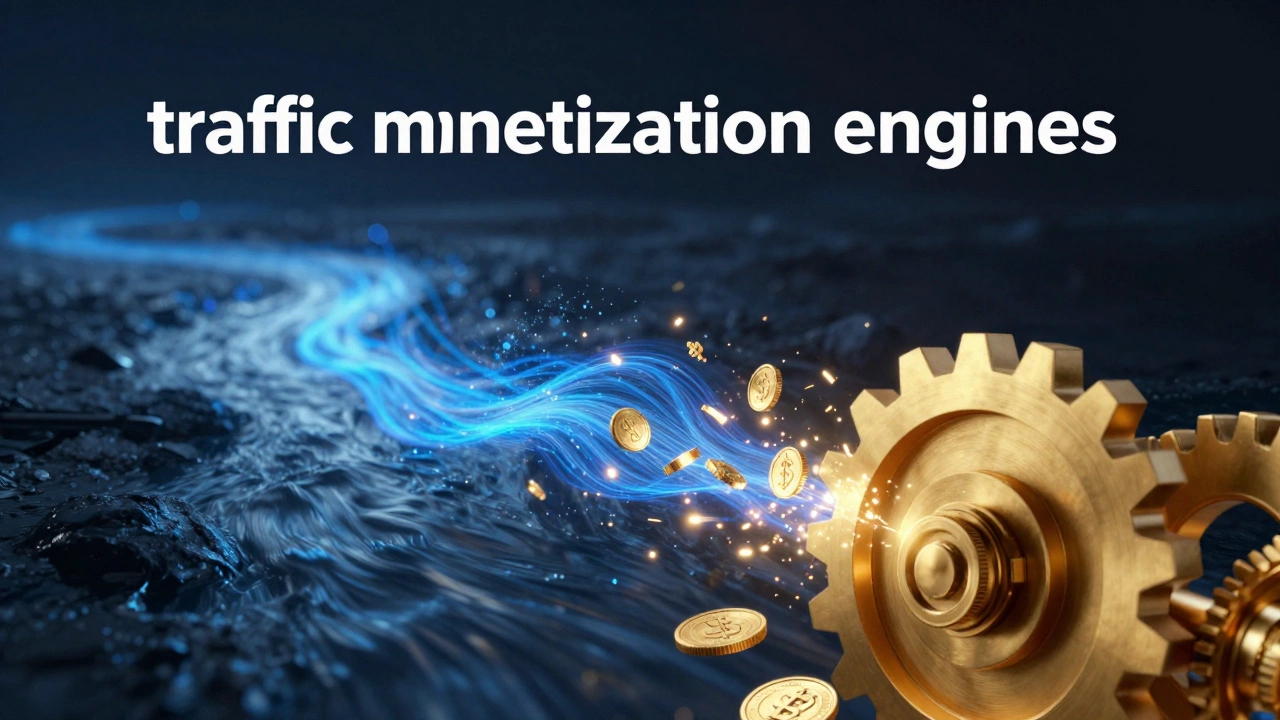
Most people start a website with a dream of passive income, but the reality is that a pretty design doesn't equal a fat bank account. The truth is, some website types are naturally built for profit, while others are just expensive hobbies. If you're looking to build a digital asset that actually generates a living, you need to stop thinking about "topics" and start thinking about "monetization engines." The difference between a site making $10 a month and one making $10,000 often comes down to the business model, not just the amount of traffic.
Key Takeaways for High-Profit Sites
- High-Ticket Focus: Sites selling expensive products or services always beat high-traffic sites relying on small ad clicks.
- Recurring Revenue: Membership and subscription models provide the most stability.
- Problem-Solving: The more urgent the problem your site solves, the more you can charge.
- Ownership: Selling your own product (digital or physical) scales better than promoting others.
The Heavy Hitters: Most Profitable Website Types
When we talk about the most profitable website types, we have to look at where the money flows. Not all traffic is created equal. A million visitors reading celebrity gossip is worth far less than a thousand visitors looking for a corporate lawyer. Here are the models that consistently dominate the earnings charts.
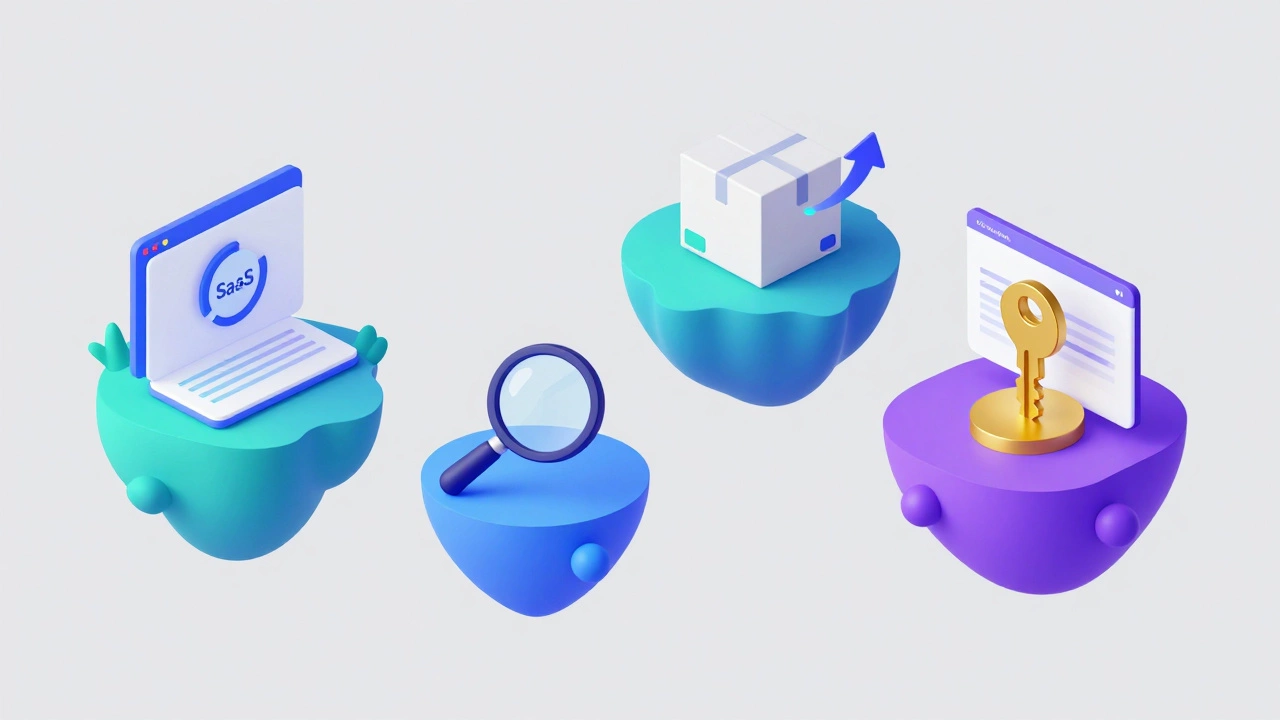
SaaS (Software as a Service) is a software distribution model where a provider hosts an application and makes it available to customers over the internet. This is arguably the gold mine of the internet. Instead of a one-time payment, users pay a monthly fee to access a tool. Think of tools like Shopify or Canva. Because the value is delivered continuously, the income is predictable. The "magic" here is the scalability; once the code is written, adding 1,000 more users doesn't cost much more than adding ten.
E-commerce Stores are websites that allow businesses to sell products directly to consumers online. While the margins on physical goods can be tight due to shipping and inventory, the ceiling is massive. The real money in e-commerce today isn't in dropshipping cheap gadgets from overseas, but in "Direct-to-Consumer" (DTC) brands. By creating a unique product and building a brand, you control the pricing and the customer relationship.
Affiliate Marketing Sites focus on promoting third-party products and earning a commission for every sale made through a referral link. These sites make the most money when they target "high-ticket" niches. For example, a site reviewing $5,000 enterprise software will make significantly more per click than a site reviewing $10 books. The secret is targeting "commercial intent" keywords-phrases like "best [product] for [specific use case]"-where the reader is already in the mood to buy.
Membership Sites provide exclusive content, communities, or tools accessible only to paying members. This model turns a website into a private club. Whether it's a professional certification group or a fitness community, the value lies in the exclusivity and the curated experience. The recurring revenue makes this much less stressful than chasing new traffic every single day.
| Model | Primary Revenue Source | Startup Cost | Scalability | Risk Level |
|---|---|---|---|---|
| SaaS | Monthly Subscriptions | High (Dev costs) | Extreme | Medium |
| E-commerce | Product Sales | Medium to High | High | High (Inventory) |
| Affiliate | Commissions | Low | Medium | Medium |
| Membership | Recurring Fees | Low to Medium | High | Low |
Why Some Sites Fail to Monetize
You've probably seen blogs with huge amounts of traffic that barely make enough to cover their hosting bills. Why? Because they rely solely on display ads. While Google AdSense is an advertising network that allows website publishers to serve automatic text, image, and video ads, it is the lowest form of monetization. You need millions of impressions to make serious money. If your site's value is just "information," you are competing with every other free site on the web.
To make a site profitable, you have to move up the value chain. Instead of selling your visitors' attention to advertisers, sell a solution to your visitors. If you have a site about gardening, don't just put ads on the sidebar; sell a "Master the Winter Harvest" digital course for $49. You'll make more from 20 course sales than from 20,000 ad impressions.
The Role of High-CPM Niches
If you are set on the affiliate or ad-based route, you must pick a niche where the advertisers are desperate to spend money. In the industry, we look at the Cost Per Mille (CPM)-the cost per thousand views. Some niches have a CPM of $1, while others have a CPM of $50.
Financial services, insurance, and legal advice are classic high-paying niches. Why? Because the "Customer Lifetime Value" (CLV) for a bank or a law firm is enormous. A single lead for a personal injury lawyer could be worth thousands of dollars, so they are willing to pay a premium to get that lead. If you build a site around Personal Finance, you're entering a space where the competition is fierce, but the payouts are the highest in the game.
Building a Sustainable Profit Engine
The most successful site owners today use a "Hybrid Model." They don't put all their eggs in one basket. They might start with an affiliate blog to build trust and traffic, then introduce a paid membership area, and eventually launch their own software tool or physical product.
- Phase 1: Authority. Create high-value content that solves specific problems. This attracts a targeted audience.
- Phase 2: Validation. Use affiliate links to see which products your audience actually buys. This tells you what they value.
- Phase 3: Productization. Create your own version of the most popular product. This removes the middleman and boosts your margins from 10% to 80%.
- Phase 4: Recurring Revenue. Wrap your products or content into a subscription model to stop the "start from zero every month" cycle.
Common Pitfalls to Avoid
One big mistake is chasing "trending" niches. Yes, a site about a new AI tool might explode overnight, but if that tool becomes obsolete in six months, your income vanishes. True profitability comes from solving "evergreen" problems-things people will still care about in five years, like making money, improving health, or saving time.
Another trap is over-investing in the "look" of the site. Many people spend three weeks picking a font and zero hours researching their market. Your users don't care if your website is a masterpiece of modern art; they care if you can solve their problem. Focus on the offer first, and the aesthetics second.
Can a simple blog actually make as much as a SaaS business?
It's possible, but much harder. A blog usually relies on traffic volume and ad/affiliate rates. A SaaS business relies on the utility of the tool. To make SaaS-level money with a blog, you typically need to pivot into selling your own high-ticket digital products, like consulting or specialized courses, rather than just relying on clicks.
Which is better for beginners: E-commerce or Affiliate sites?
For most beginners, affiliate sites are safer because they require less upfront capital and no inventory management. However, e-commerce has a higher potential for long-term brand equity. If you have a budget and a unique product idea, go with e-commerce. If you have more time than money, start with affiliate marketing to learn the ropes of SEO and traffic.
How much traffic do I need before I can monetize?
If you're using ads, you need thousands of visitors daily to see significant money. But if you're selling a high-ticket service or a specialized course, you can be profitable with as few as 100 targeted visitors a month. Focus on the quality of the lead, not the quantity of the hits.
Is it too late to start a profitable website in 2026?
Not at all, but the strategy has changed. Generic "information" sites are struggling because of AI search summaries. The winners now are "experience-based" sites. People want real human testing, personal case studies, and unique perspectives that an AI can't fake. The shift is from "what is this" to "how did this work for a real person."
What is the fastest way to start making money with a new site?
The fastest path is usually providing a service (consulting, freelancing) through your site. While a SaaS takes months to build and a blog takes months to rank in Google, a "Services" page can bring in a client the moment you find the right lead. Once you have cash flow from services, you can reinvest that into more scalable models like products or software.
Next Steps: Choosing Your Path
If you're still undecided, look at your own strengths. Do you enjoy writing and researching? Start an affiliate or authority site. Are you a builder or a problem-solver? Look into SaaS. Do you have a passion for physical products and branding? Go the e-commerce route. The most important thing is to pick a model that you can stick with for at least a year, because no matter how "profitable" the type of website is, the only one that makes zero dollars is the one you quit on after three months.