Ever read a blog post and felt instantly hooked? Not because of the topic, but because the very first sentence pulled you in like a magnet? That’s not luck. It’s strategy. The first line of your blog post isn’t just an opener-it’s your handshake, your pitch, your make-or-break moment. If it flops, readers bounce. If it lands, they keep scrolling. So what makes a good first line? It’s not about being poetic or clever. It’s about creating a gap in their mind-and then offering the only way to close it: by reading on.
Start with a question that hits too close to home
People don’t read blogs to be entertained. They read because they’re stuck. They want answers. So ask a question they’ve asked themselves but never dared to say out loud.Instead of: "Today I’m talking about productivity hacks."
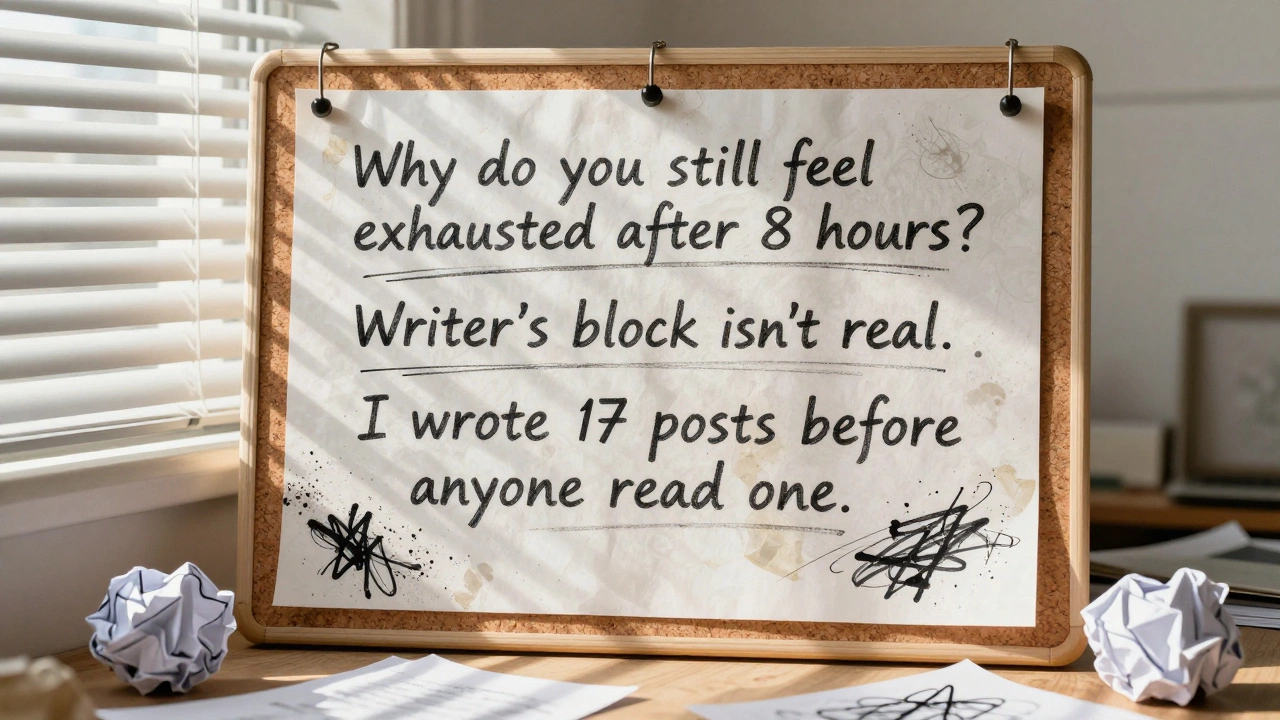
Try: "Why do you still feel exhausted after working 8 hours?"
That line works because it names a feeling millions of people have but rarely admit. It’s not about productivity tools. It’s about guilt, shame, and the quiet panic of not being enough. When you name that emotion, readers think: "That’s me." And now they can’t look away.
Good opening questions are specific, emotional, and slightly uncomfortable. They don’t ask "How can I be more productive?"-they ask: "Why does your to-do list feel like a prison?" or "When did you last finish something you started?"
Use a bold, unexpected statement
Your reader’s brain is already filtering out 90% of what they see online. To break through, say something that contradicts what they believe. Surprise creates curiosity.Bad: "Many people struggle with writer’s block."
Good: "Writer’s block isn’t real. You’re just afraid of being bad."
That line shocks. It’s direct. It doesn’t offer comfort-it offers truth. And truth, even when harsh, makes people pause. It forces them to question their own assumptions. That’s when they start reading to find out if you’re right… or if they can prove you wrong.
Other examples:
- "You don’t need more time. You need to stop lying to yourself about what matters."
- "The secret to growing a blog? You don’t need 10,000 readers. You need 10 who hate you."
- "Most blogging advice is garbage. Here’s what actually works."
These lines don’t ask for permission. They challenge. And in a sea of polite, safe content, that’s magnetic.
Drop them into the middle of a story
Humans are wired for stories. Not facts. Not lists. Stories.Instead of: "I started blogging in 2020 and here’s what I learned."
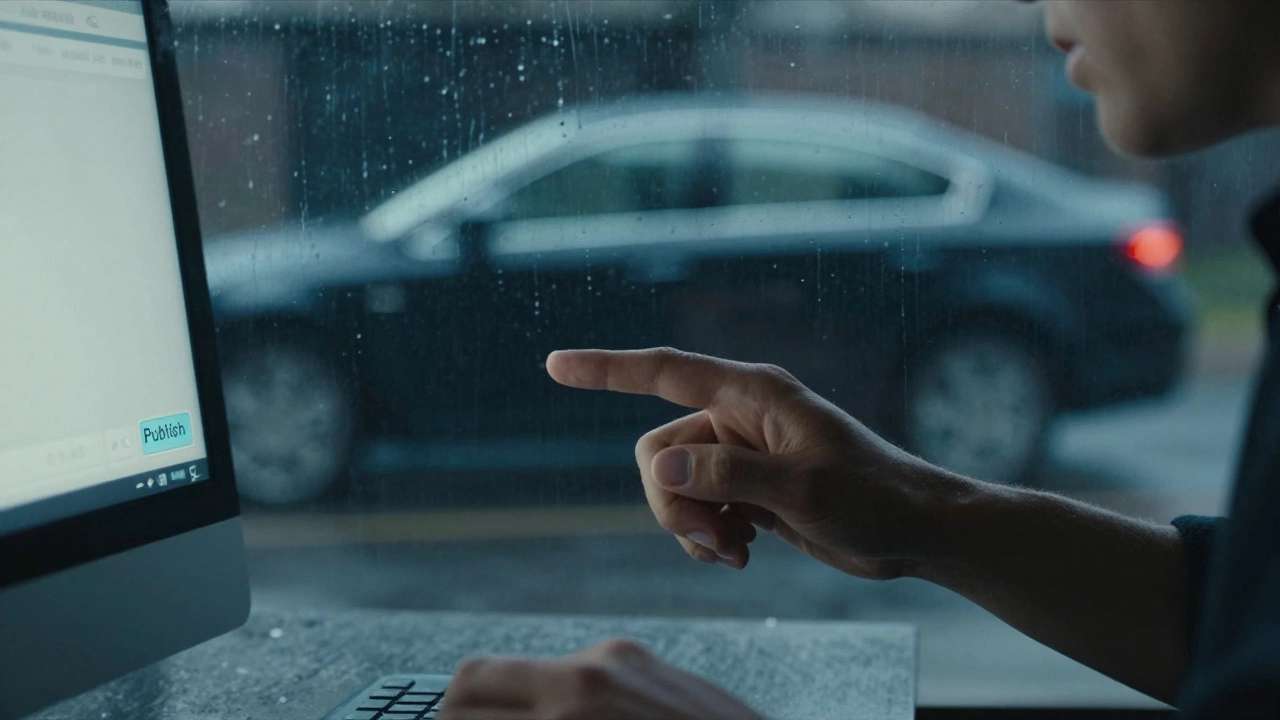
Try: "I sat in my car for 47 minutes after sending my first blog post, crying because I was too scared to hit publish."
That’s not an introduction. That’s a moment. It’s raw. It’s human. It says: "I’ve been there. And you’re not alone."
Real stories don’t need to be dramatic. They just need to be real. Did you forget to save your first draft? Did you write a post in your pajamas at 3 a.m. and then delete it because you thought it was stupid? That’s your opening.
Good story openings don’t explain-they immerse. They drop you into a scene. You don’t need a full backstory. Just one sensory detail: the smell of burnt toast, the sound of your cat knocking over your coffee, the way your hands shook before clicking "Post."
Use numbers that feel personal
Numbers grab attention-but only if they’re specific and human. Generic stats like "83% of bloggers fail" don’t work. They’re noise.Instead, use numbers that feel like they came from your life:
- "I wrote 17 blog posts before anyone read one."
- "My first post got 3 views. One was my mom. One was my dog. One was me, refreshing the page."
- "I spent 112 hours on my first blog. It made $4.27."
These numbers aren’t impressive. They’re honest. And honesty builds trust faster than any polished headline ever could. Readers don’t care how many followers you have. They care if you’ve been where they are.
When you use personal numbers, you’re not just sharing data-you’re sharing vulnerability. That’s what makes people stick around.
Challenge a popular belief
The internet is full of "rules" for bloggers: "Post every day," "Use 5 hashtags," "Write 2,000 words." Most of them are nonsense.Flip one on its head.
Bad: "Here are 7 tips to grow your blog faster."
Good: "Stop posting every day. Here’s why doing less actually grows your audience."
Or:
- "SEO isn’t the secret to blog growth. Relationships are."
- "You don’t need a niche. You need a voice."
- "Your blog doesn’t need to be perfect. It just needs to be real."
When you contradict the noise, you become the voice people are tired of hearing but finally want to listen to. You’re not just offering advice. You’re offering relief from the pressure to perform.
Start with a line that sounds like a confession
People don’t read blogs to be lectured. They read to feel understood.Try opening with something like:
- "I still don’t know what I’m doing. But I’m doing it anyway."
- "I hate writing. But I keep doing it because it’s the only thing that makes me feel alive."
- "I used to think blogging was about traffic. Now I know it’s about belonging."
These lines don’t try to impress. They don’t claim expertise. They just say: "I’m human. And so are you." That’s the quiet magic of good first lines-they don’t sell. They connect.
What to avoid
Not every opener works. Here are the three most common mistakes:- "Welcome to my blog!" - No one cares. You’re not a hotel.
- "In today’s post, I’ll show you..." - That’s a textbook intro. Boring. Predictable. Skip it.
- "Many people struggle with..." - Too vague. Who are "many people"? Why should I care?
These lines are polite. They’re safe. And they’re invisible. Your reader’s brain skips right over them.
Test your first line
Before you hit publish, ask yourself:- Would someone read this if they saw it on Twitter or Instagram?
- Does it make them feel something-curiosity, shock, recognition, relief?
- Does it force them to ask, "Wait, what does that mean?"
If the answer is no, rewrite it. Keep rewriting until it feels like something you’d say to a friend over coffee. Not a performance. Not a sales pitch. Just a real, messy, honest thing.
First lines aren’t about writing well. They’re about thinking clearly.
The best first lines don’t come from fancy writing courses. They come from knowing your reader. Who are they? What are they afraid of? What do they wish someone would just say out loud?Answer that-and your first line will write itself.